Men’s course record
2:01:09
Eliud Kipchoge · 2022
- Average pace
- 2:52 / km
- Terrain-adjusted
- +0.05 %
Europe15
Americas6

Berlin, Germany The last Sunday in September Founded 1974
A ten-minute walk from start to finish, and thirteen world records set in between.
Marathon Course · every marathon course, measured the same way
Berlin Marathon
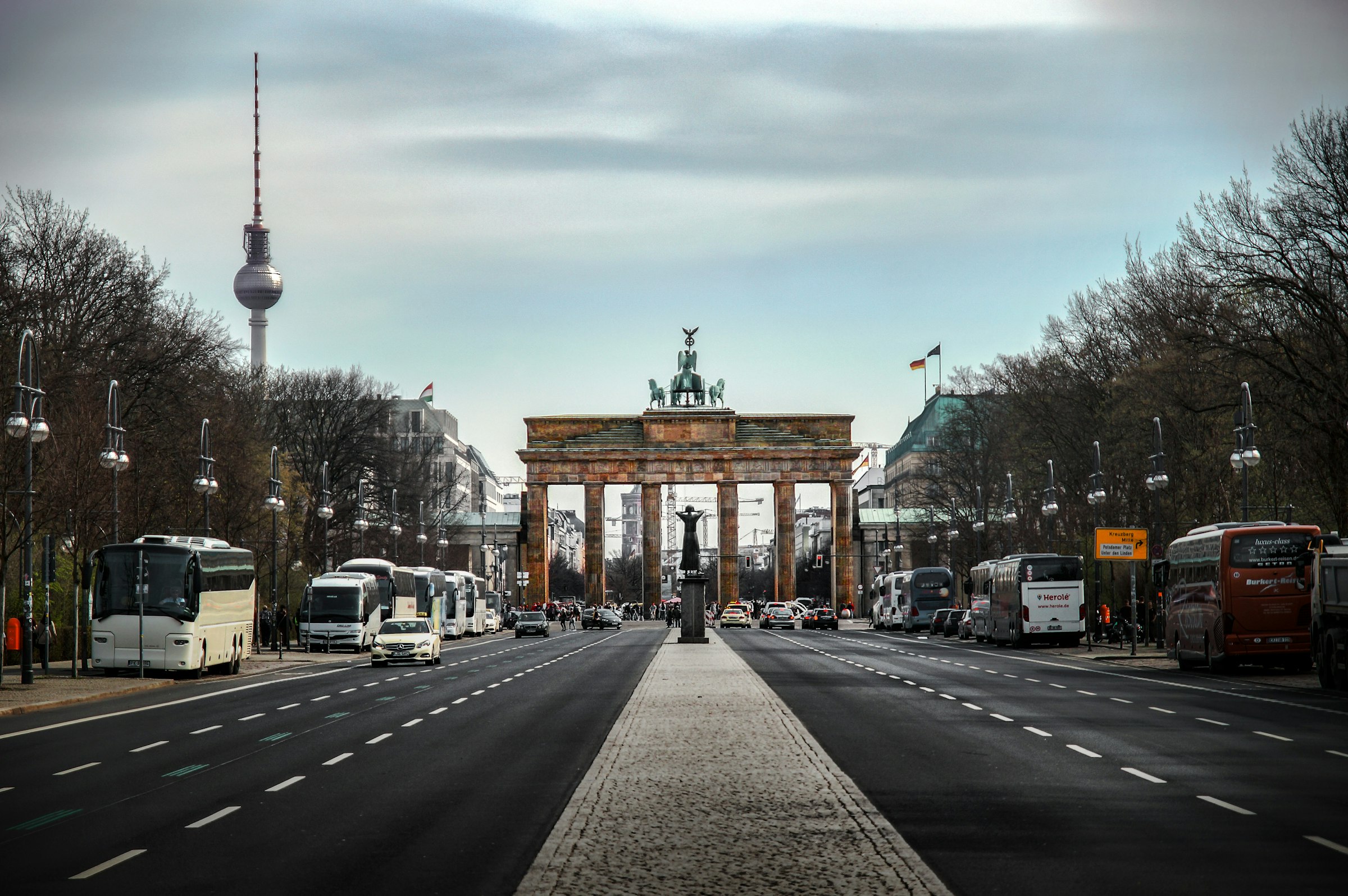
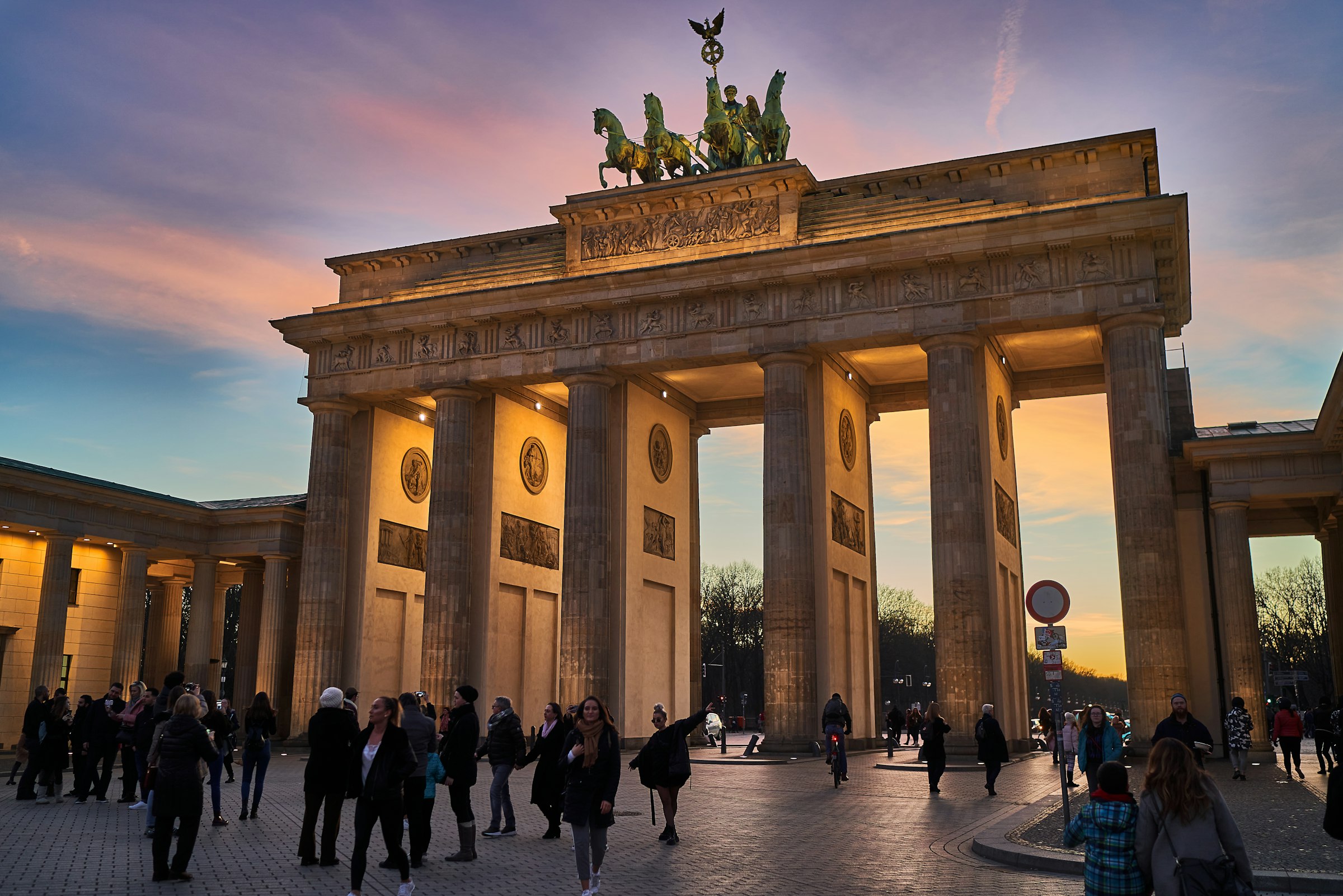
A ten-minute walk from start to finish, and thirteen world records set in between. Straße des 17. Juni → Brandenburg Gate, Berlin, Germany.
Elevation · measured on the organiser's own course file · Sonny 1" .hgt tiles — CC BY 4.0 · smoothed 100 m 33–54 m
—
0.08.416.825.333.742.1
kmmi — elev — grade — hover or drag the profile
The whole course fits inside 21 m of height. Its lowest point is 33 m, at 4.0 km, and its highest 54 m, at 27.8 km.
What shape there is comes in the middle. The course drifts up through the second half of the twenties, and the steepest kilometre of the race, 9 m, runs from 26.8 km towards Innsbrucker Platz. It gives that back between 30.0 km and 35.0 km, losing 8 m on the way back north.
The last 7.0 km are flat to within 3 m, through Potsdamer Platz and Checkpoint Charlie to Unter den Linden and the Gate. Add up the energy cost of every gradient and the course comes out about level with a flat 42.195 km.
Take it with you
Course GPX Organiser's course map
The GPX is ours: our resampled line, a point every 25 m, carrying Sonny 1" .hgt tiles — CC BY 4.0 elevation rather than the GPS noise a watch file usually holds.
Sonny 1" .hgt tiles — CC BY 4.0, measured on the organiser's own course file, smoothed 100 m · marathoncourse.com/marathons/berlin/ · checked 2026-09-23

19801990200020102020
Pace is derived from the certified distance. Terrain-adjusted figures come from the same model that ranks every course on this site.
Men’s course record
2:01:09
Eliud Kipchoge · 2022
Women’s course record
2:11:53
Tigst Assefa · 2023
The morning, hour by hour
Anyone who hasn't reached km 33 by 3:40pm is withdrawn and taken to the finish. The official finish time is 5:00pm; later crossings are recorded but not official. The time limit is 6 hours 15 minutes from crossing your own start mat, not from the gun.
Race-day mean temperature, 1995-2025. Lime marks the hottest edition; the coldest and wettest carry a label only, so the colour still means one thing.
Very. The whole course sits between 33 m and 54 m, a vertical range of 21 m. It climbs 72 m across 42 kilometres, and the steepest kilometre gains 9 m. There's no hill as such, only a slight tilt in the middle.
Sonny's LiDAR DTM of Europe, sampled every 25 m, smoothed over 100 m. Raw-to-smoothed ratio 1.56.
Long, straight, wide roads with few turns, and a course that finishes higher than it starts, so no fast time here can be put down to a downhill. The start and finish are 840 m apart, and the course passes both World Athletics tests comfortably, though not by the widest margin: Vienna and Paris gain more, and a dozen loop courses start and finish closer together. Add late-September weather with a median of 14 °C and you have the conditions behind thirteen world records.
This site's own measurements, checked against World Athletics Competition Rules Part III; weather from ERA5, 1995–2025.
Not since 2022. Kipchoge's 2:01:09, set here that year, was beaten by Kelvin Kiptum at Chicago in 2023 and then by Sabastian Sawe at London in 2026, the first marathon under two hours. Tigst Assefa's 2:11:53 from 2023 was beaten at Chicago in 2024. Both still stand as Berlin course records.
Race results, checked September 2026.
The organiser publishes no odds, and third-party estimates run from one in five to one in three. London's 2027 ballot took 1.34 million applications and New York accepted about one per cent in 2026, while Sydney's draw works out at roughly one in three.
Third-party estimates; the organiser publishes neither applicant numbers nor odds.
Close to exact. It's one of three lines here taken straight from the organiser's own file, with Rotterdam and Copenhagen, and it measures 42,184 m against a certified 42,195. That's eleven metres out over a marathon, an error of 0.03 %, the smallest of the lot.
Organiser course file, archived with its SHA-256 in data/raw/sources.
More than 54,000 took a marathon place in 2026.
Organiser figures for the 2026 edition.
About 14 °C during a typical race: that's the median across 31 years, which have run from 10.2 °C to 21.8 °C. 6 of the 31 were wet.
ERA5 reanalysis for the race date, 1995-2025.
Berlin finishes higher than it starts, by under a metre, so yes. The course is certified, and the B.A.A.'s downhill adjustment only starts at 1,500 ft of net loss. Plenty of people fly here to chase a qualifier on a course this flat.
Net drop +1 m from this site's course line; 2027 adjustment None. Certification platinum label: World Athletics Platinum Label; record-eligible, and thirteen world records have been ratified on it.
It comes from Sonny 1" .hgt tiles — CC BY 4.0, sampled every 25 m along the course line and smoothed over 100 m. The raw-to-smoothed ratio here is 1.56. Around 1.3 means the model is reading the ground, not rooftops; above about 2.0 the total climb carries real noise, and the net change is the sturdier number.
0 missing samples · 8 bridge spans corrected.
| Fact | Source | Verified |
|---|---|---|
| Course line | The organiser's own published course file for the 2025 edition — one of only three races here whose line comes from the organiser rather than a third party — Rotterdam and Copenhagen are the others. It measures 42.184 km against a certified 42.195, an error of 0.03 %, the smallest on the site. Archived with its hash in data/raw/sources. | 2026-09-18 |
| Elevation | Sonny's LiDAR DTM of Europe (CC BY 4.0), sampled every 25 m, smoothed over 100 m. Raw-to-smoothed gain ratio 1.56. Eight bridge spans corrected. Cross-checked against Berlin's own DGM1 1 m lidar, which agrees on net (+1.0 against +0.8 m), minimum and maximum to within half a metre, but reads 86.5 m of gain against our 72.3 — 14 m apart on the one figure most exposed to model noise. The two sources also share a lineage, so even that agreement is a test of downsampling rather than of independence. | 2026-09-18 |
| Elevation, independent check | The organiser publishes figures in the region of 73–80 m of climb; our 72.3 m sits just below that range. Berlin is also the course that showed this project why global elevation models will not do: SRTM 30 m reads this same line as 554 m. | 2026-09-18 |
| Race-day weather | ERA5 reanalysis via the Open-Meteo archive, 1995–2025 at the Tiergarten start, 09:00–14:00 local, sampled on the last Sunday in September. The race is usually on that date but not always: 2025 was a week early, 1998 a week early and 2018 two weeks early, so at least three of the 31 samples are sampled on a day the race did not run. | 2026-09-18 |
| Course records and world records | Kipchoge 2:01:09 (2022) and Tigst Assefa 2:11:53 (2023) remain the course records. Thirteen world records have been set here. Both marks have since been beaten elsewhere — the men's at Chicago in 2023 and London in 2026, the women's at Chicago in 2024. | 2026-09-23 |
| Entry, ballot and field | Ballot for 2026 open 25 September to 6 November 2025, entry €205. 48,359 finished in 2025. The organiser advertises 'well over 56,000 athletes' across every discipline and both days rather than a marathon field; the 54,000 here is inferred from recent finisher counts, and the 2024 total is itself given as 54,062 on the timing list and 54,280 by the organiser. Published estimates of the ballot odds range from one in five to one in three. | 2026-09-23 |
| Race day | The organiser's 2026 race briefing: start-area access by letter from 7:00am, handbikes 8:20am, elite wheelchairs 8:26am, six running waves 8:45am–10:27am, refreshment points at km 5/9/15/20/25/30/36/40, a 3:40pm cut-off at km 33, official finish 5:00pm, and a 6 h 15 min limit measured from your own start mat. | 2026-09-23 |
| Record eligibility | World Athletics Competition Rules, Book C, Part III — Competition Rule 31.21: a record course may lose no more than 1 m per kilometre, and its start and finish may be no more than 21.098 km apart. Berlin gains 0.8 m overall and its start and finish are 840 m apart. Inside both. | 2026-09-23 |
Until the Berlin Marathon · 27 Sept 2026
— days
— hrs— min— sec
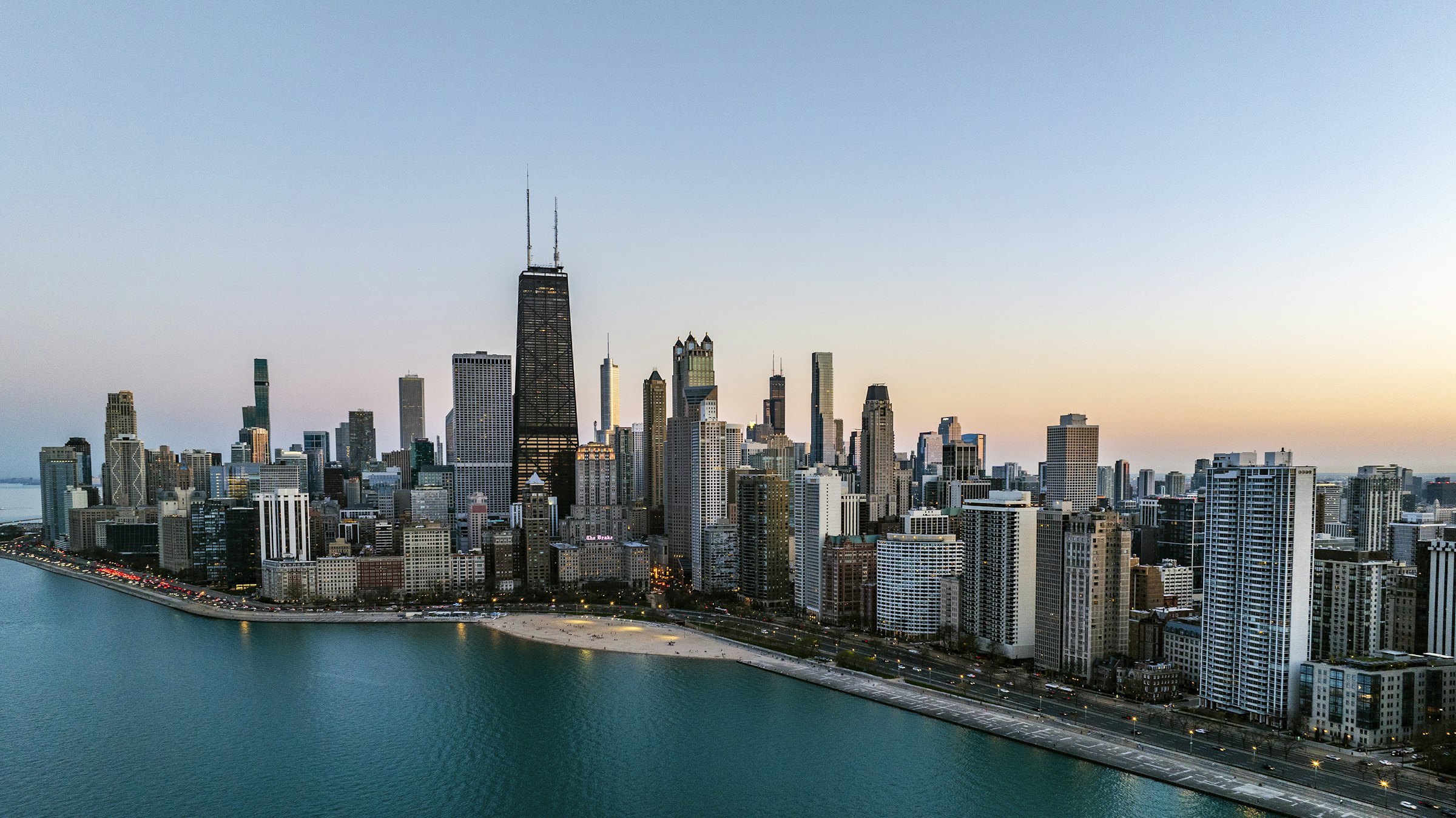
Chicago, USA · 11 Oct 2026
Seven world records on a loop through twenty-nine neighbourhoods.
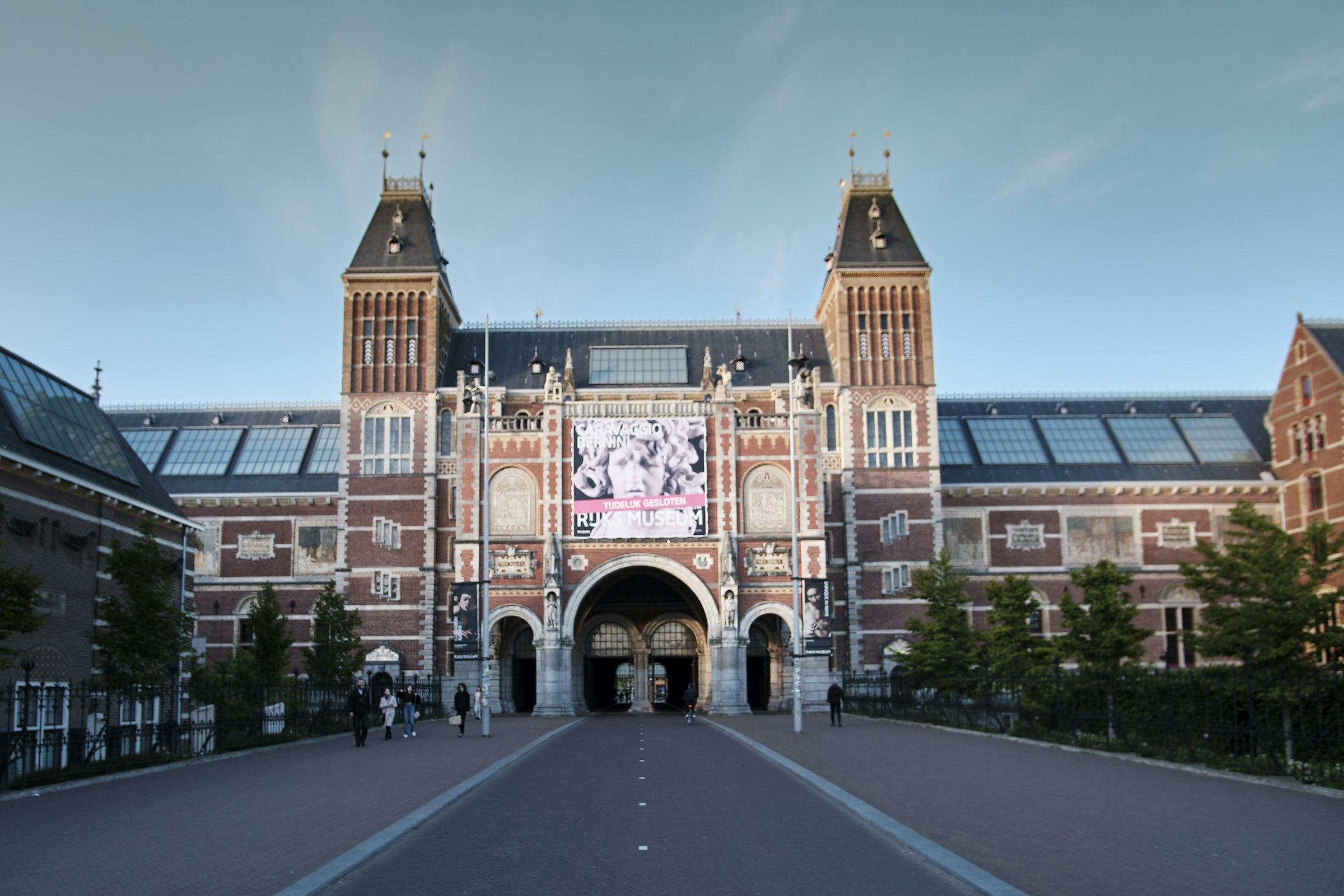
Amsterdam, Netherlands · 18 Oct 2026
From the 1928 Olympic Stadium, through the Rijksmuseum and twelve kilometres out along the Amstel.

Toronto, Canada · 18 Oct 2026
Canada's biggest marathon spends most of the morning on the shore of Lake Ontario.