Men’s course record
2:06:52
Kemal Husen · 2023
- Average pace
- 3:00 / km
- Terrain-adjusted
- +0.25 %
Europe15
Americas6

Dublin, Ireland The Sunday of the October bank-holiday weekend Founded 1980
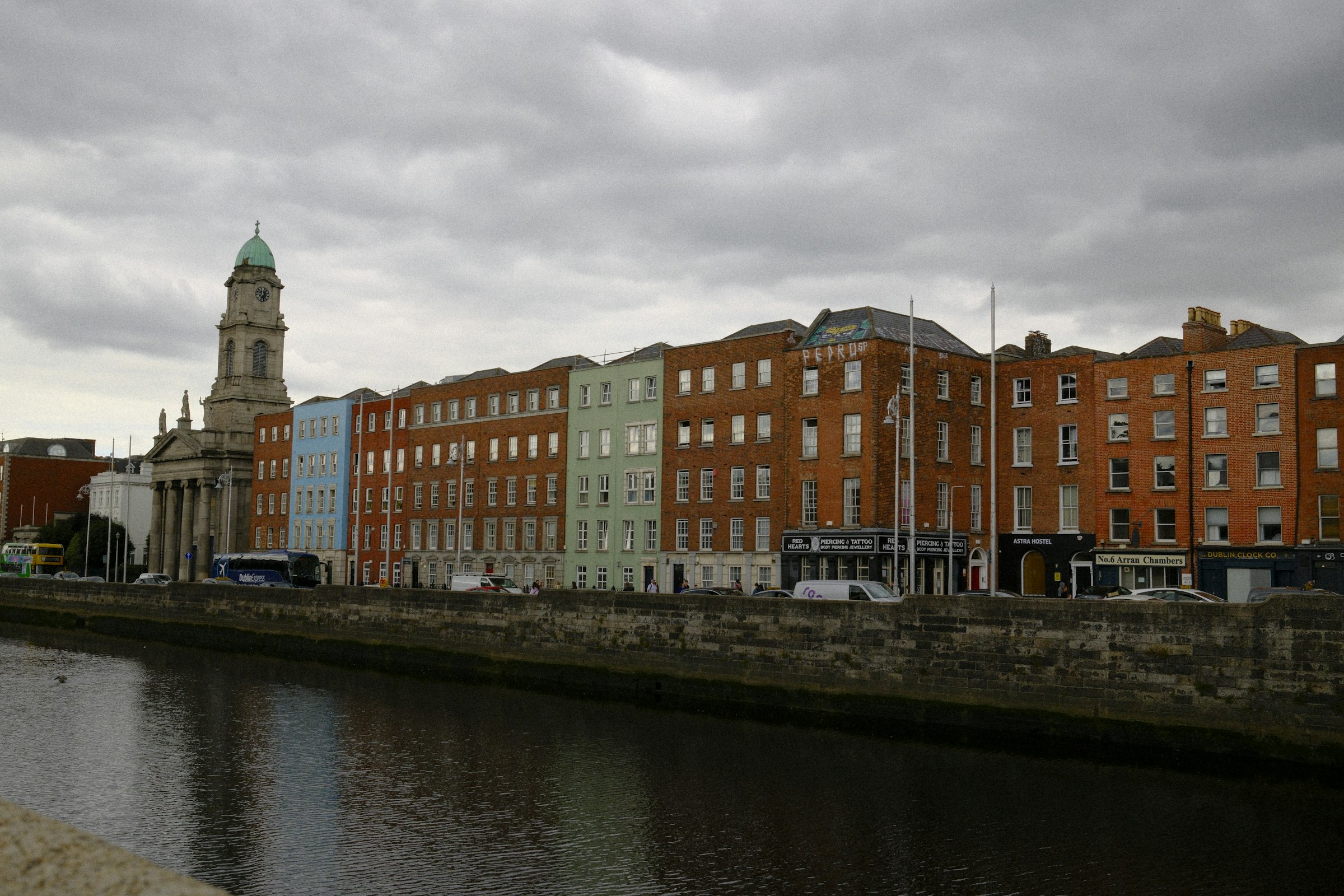
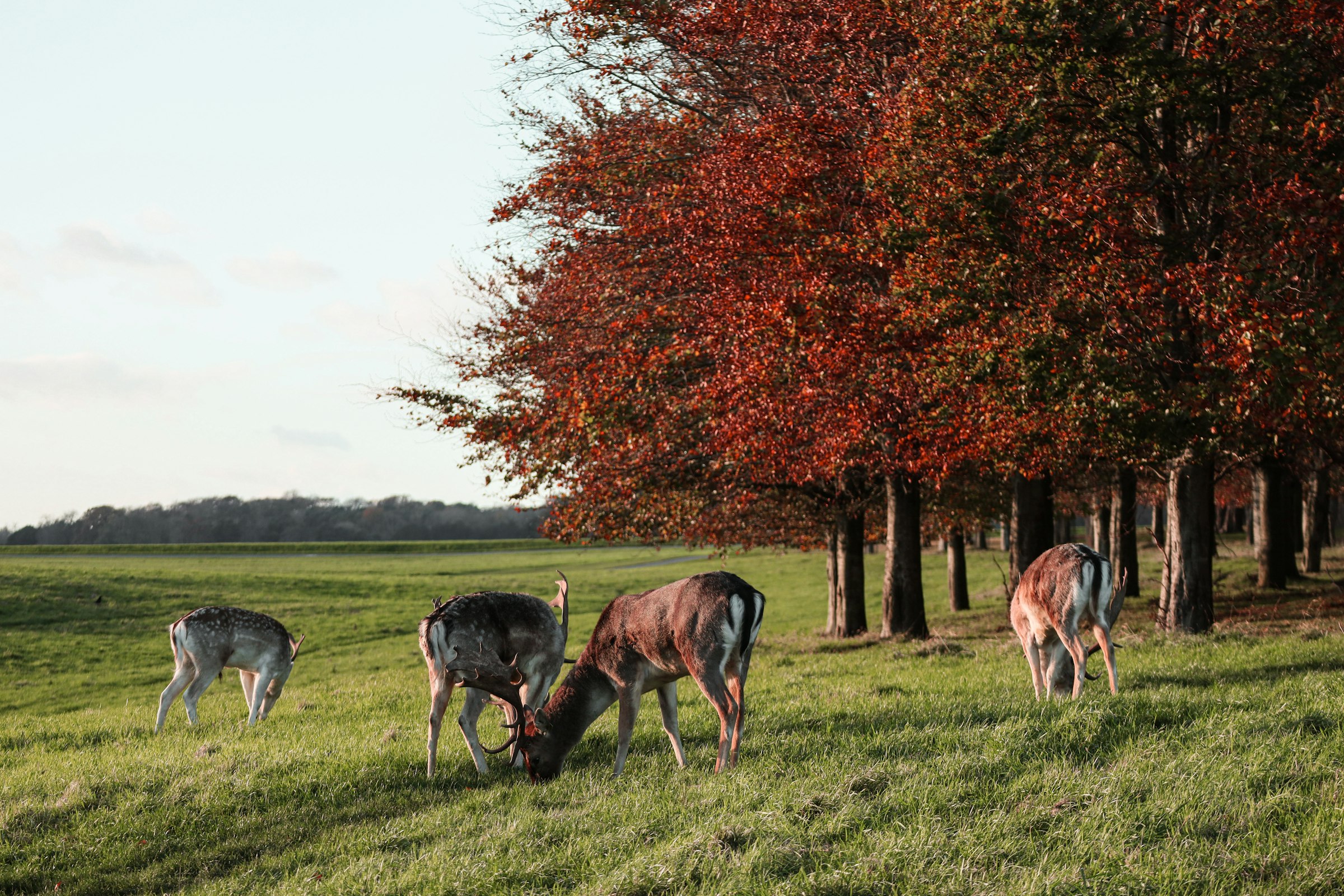
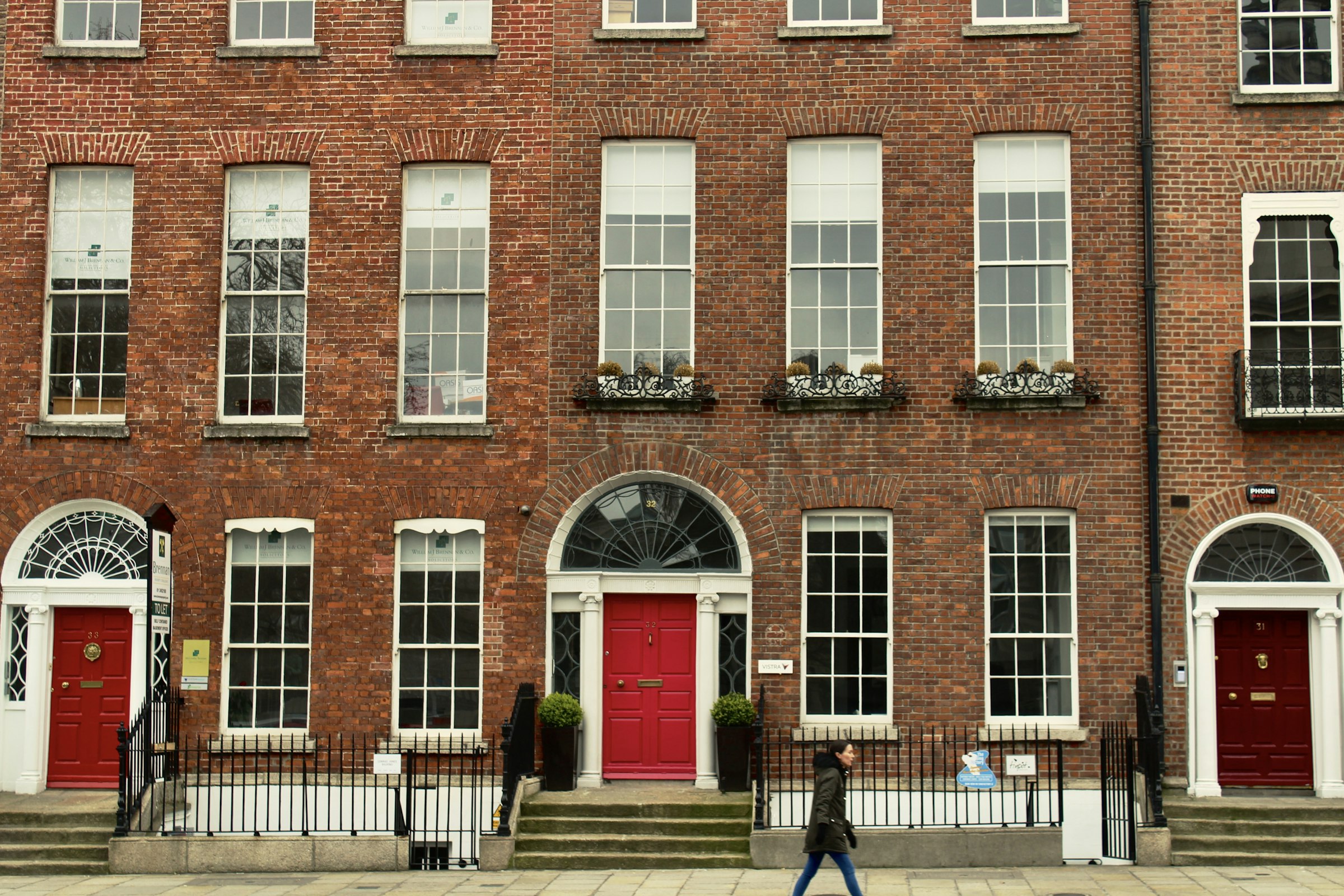
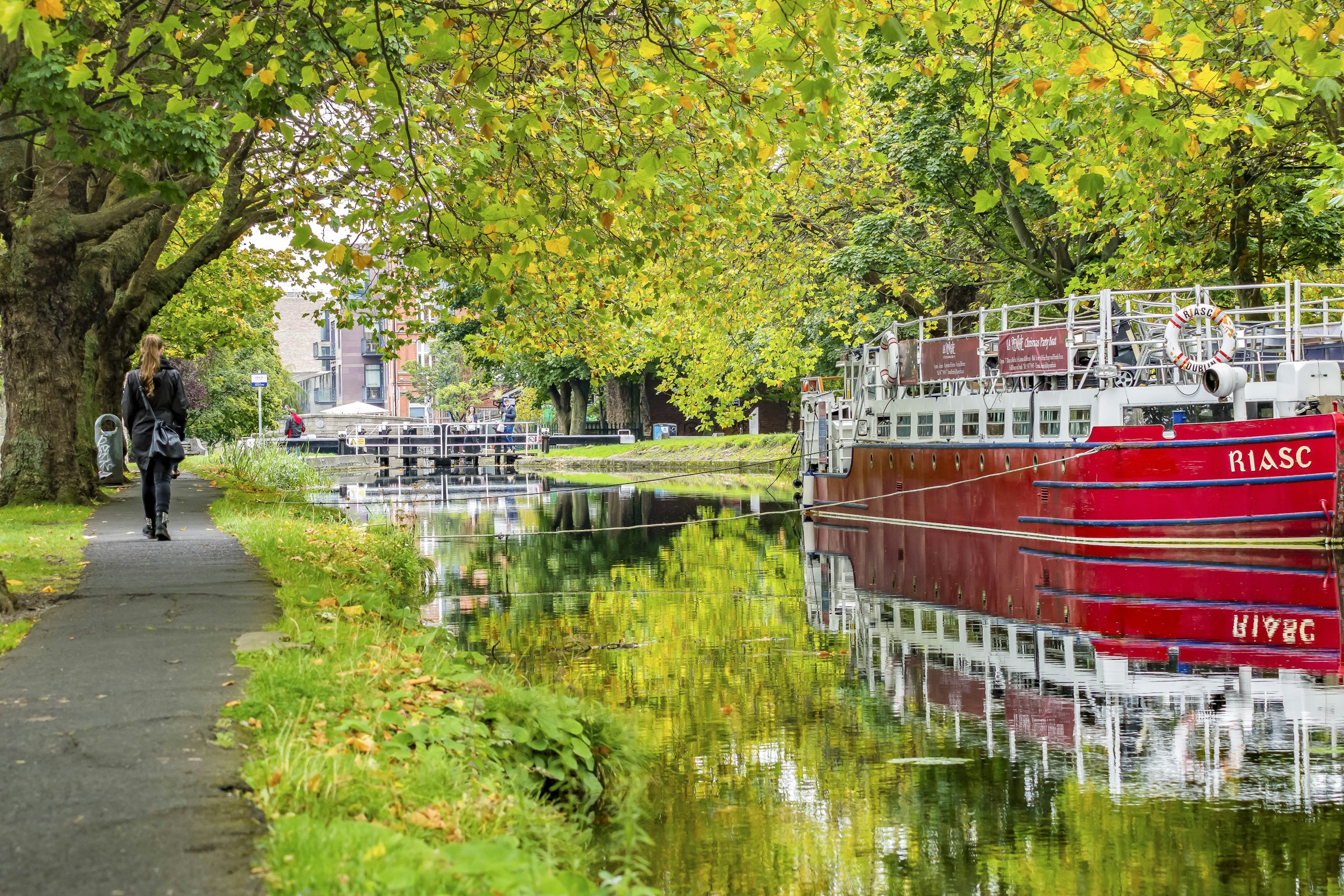
The bank-holiday marathon: out through Phoenix Park, round the southern suburbs, and home past the Georgian squares.
Marathon Course · every marathon course, measured the same way
Dublin Marathon
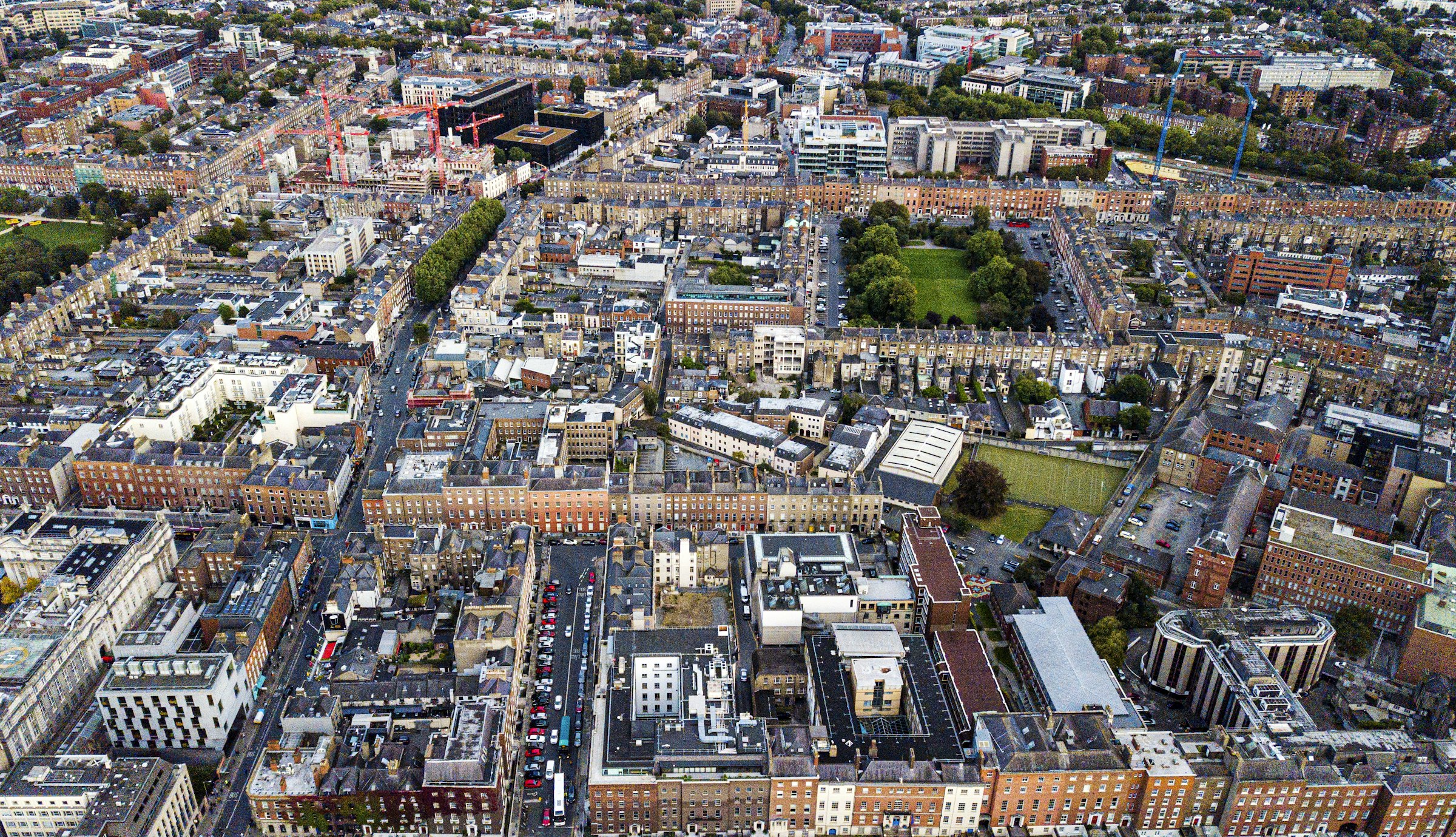
The bank-holiday marathon: out through Phoenix Park, round the southern suburbs, and home past the Georgian squares. Leeson Street Lower → Mount Street Upper, Dublin, Ireland.
Elevation · a third-party GPX from 2024, the first year on the current start and finish · Sonny 1" .hgt tiles — CC BY 4.0 · smoothed 100 m 2–70 m
—
0.08.516.925.433.842.3
kmmi — elev — grade — hover or drag the profile
Most of the climbing, 141 m of it, comes in the first half. The road rises from 2 m on the quays at 2.7 km to the high point of the course, 70 m near the Castleknock Gate of Phoenix Park at 11.5 km. The steepest climbing kilometre is the first real one: 18 m up from the river through Stoneybatter, from 3.6 km.
What the park gives, it takes back quickly. The steepest kilometre of the race is a descent, 25 m lost from 14.3 km, out of the park and down to the Liffey at Chapelizod. Then the course climbs again, more gently, to about 52 m through Kimmage and Terenure between 24.0 km and 28.0 km.
Roebuck hurts because of where it comes. From 17 m at 33.5 km the road rises to 44 m at 35.9 km. On the way, the steepest climbing kilometre of the second half gains 15 m. After that the course falls to its lowest point, 2 m on Merrion Road at 39.1 km. It finishes 10 m above sea level, 4 m lower than it started. Add up the energy cost of every gradient and, for a three-hour runner, the course comes out about 30 seconds slower than a flat 42.195 km (0.25 %).
Take it with you
Course GPX Organiser's course map
The GPX is ours: our resampled line, a point every 25 m, carrying Sonny 1" .hgt tiles — CC BY 4.0 elevation rather than the GPS noise a watch file usually holds.
Sonny 1" .hgt tiles — CC BY 4.0, a third-party GPX from 2024, the first year on the current start and finish, smoothed 100 m · marathoncourse.com/marathons/dublin/ · checked 2026-09-24
19801990200020102020
Pace is derived from the certified distance. Terrain-adjusted figures come from the same model that ranks every course on this site.
Men’s course record
2:06:52
Kemal Husen · 2023
Women’s course record
2:24:13
Asmarech Nega · 2024
The morning, hour by hour
The organiser's 2026 start and finish map. Times are GMT: the clocks go back that morning. There are no intermediate cut-offs. The course closes seven hours after the last runner crosses the start. Tail walkers follow at that pace and ask anyone behind them onto the footpath. Official timing ends at 4:55pm.
Race-day mean temperature, 1995-2025. Lime marks the hottest edition; the coldest and wettest carry a label only, so the colour still means one thing.
It climbs 232 m, about three times as much as Berlin. Its vertical range, 68 m from 2 m to 70 m, is within a metre of New York's. Most of the climbing is in the first half, which gains 141 m, and the second half is kinder. It won't flatter your time.
Sonny's LiDAR DTM of Europe, sampled every 25 m, smoothed over 100 m. Raw-to-smoothed ratio 1.45.
Clonskeagh and Roebuck Road, between about 33.5 km and 36.0 km. The road rises from 17 m to 44 m in that stretch, and its steepest kilometre gains 15 m. Phoenix Park is the bigger climb, but this one arrives when your legs are empty. After it the course runs downhill to Merrion Road.
This site's course line; the organiser calls it the Irish Heartbreak Hill, at about 35 km.
Irish summer time ends at 2:00am on race morning. The race starts at 8:45am GMT, which is an hour later by your body clock than the same time the day before. The same was true in 2024 and 2025. Set a manual alarm, and don't trust every device to have caught up.
The organiser's FAQ gives timing in GMT; the clock change is the last Sunday in October.
For most runners, yes: from 2026 it takes every general entry. The 2026 ballot opened on 12 November 2025 and ran for five days. About 47,000 applied for roughly 17,200 places. The other routes are a Good for Age time, a charity place and the reserved elite and community places. The 2027 ballot hasn't been announced.
Reported ballot figures, June 2026; the organiser's registration page.
It's a popular one, and the organiser moved to a single ballot partly to bring in more first-timers. The course is harder than its friendly reputation suggests: the climb into Phoenix Park comes early and Roebuck Road late. There are no intermediate cut-offs, and the course stays open until seven hours after the last runner starts.
Organiser FAQ for the time limit; this site's course line for the climbs.
Yes. The course loses 4 m net against a World Athletics limit of about 42 m, and its start and finish are 780 m apart against a limit of half the race distance. It clears both comfortably. Kemal Husen set the course record of 2:06:52 here in 2023.
Measured from Leeson Street to Mount Street on this site's line; the rule is World Athletics Competition Rule 31.21.
Close together, which makes the day simple. The start is on Leeson Street Lower by St Stephen's Green, the finish on Mount Street Upper by the Pepper Canister Church, and baggage is on Merrion Square North between them. All three are inside a ten-minute walk.
The organiser's 2026 start and finish map.
The 2025 race sold out at 22,500 entries. In 2024, 18,091 of the entrants started and 17,719 finished.
Organiser figures for the 2025 edition.
About 9.9 °C during a typical race: that's the median across 29 years, which have run from 7 °C to 14.3 °C. 3 of the 29 were wet.
ERA5 reanalysis for the race date, 1995-2025.
The course is certified, and its net change is a drop of under 4 m, far short of the 1,500 ft where the B.A.A.'s downhill adjustment begins. So yes. The climbing is the harder part. Dublin gains 232 m, and Roebuck Road arrives at 34 km, when a qualifying pace is hardest to hold.
Net drop −4 m from this site's course line; 2027 adjustment None. Certification elite label: World Athletics Elite Label, confirmed on the label list for 2024.
It comes from Sonny 1" .hgt tiles — CC BY 4.0, sampled every 25 m along the course line and smoothed over 100 m. The raw-to-smoothed ratio here is 1.45. Around 1.3 means the model is reading the ground, not rooftops; above about 2.0 the total climb carries real noise, and the net change is the sturdier number.
0 missing samples · 0 bridge spans corrected.
| Fact | Source | Verified |
|---|---|---|
| Course line | Third-party GPX for the 2024 edition, the first on the current start and finish; the organiser's 2026 map lists the same streets in the same order. The file measures 42.585 km, 0.92 % long, from 971 points, and our resampled line measures 42.293 km. Archived with its hash in data/raw/sources. | 2026-09-24 |
| Elevation | Sonny's LiDAR DTM of Europe (CC BY 4.0), sampled every 25 m, smoothed over 100 m. Raw-to-smoothed gain ratio 1.45. Five bridge spans checked; the model did not read any of them from underneath, so none needed correcting. | 2026-09-24 |
| Elevation, independent check | The organiser publishes no climb figure, only a profile drawn for the 2015 course. Read off that chart, its high point is about 72 m near mile 7; ours is 69.8 m at 11.5 km, the same stretch of Phoenix Park. | 2026-09-24 |
| Race-day weather | ERA5 reanalysis via the Open-Meteo archive, 1995–2025 at the Leeson Street start, 09:00–15:00 local, sampled on the Sunday of the October bank-holiday weekend. Until 2015 the race ran on the Monday after that Sunday, so twenty-one of the twenty-nine samples are a day early. 2020 and 2021, when there was no race, are excluded. | 2026-09-24 |
| Course records | Kemal Husen 2:06:52 (2023) and Asmarech Nega 2:24:13 (2024), checked against the 2025 results, which broke neither. | 2026-09-24 |
| Entry, ballot and field | Ballot open 12–17 November 2025; about 47,000 applicants for about 17,200 ballot places, as reported in June 2026. Entry €110 plus €5.50 handling; €5 ballot fee. The 2025 race sold out at 22,500; 17,719 finished in 2024 from 18,091 starters. | 2026-09-24 |
| Race day | The organiser's 2026 start and finish map and FAQ: wheelchair start 8:40am, four waves 8:45–9:45am, baggage on Merrion Square North, timing to 4:55pm GMT. Drinks-station positions are read from the 2026 route map and are approximate. | 2026-09-24 |
| Record eligibility | World Athletics Competition Rules, Book C, Part III — Competition Rule 31.21: a record course may lose no more than 1 m per kilometre, and its start and finish may be no more than 21.098 km apart. Dublin loses 3.6 m overall and its start and finish are 779 m apart. Inside both. | 2026-09-24 |
Until the Dublin Marathon · 25 Oct 2026
— days
— hrs— min— sec

New York, USA · 1 Nov 2026
Five boroughs and five bridges, from the Verrazzano to Central Park.
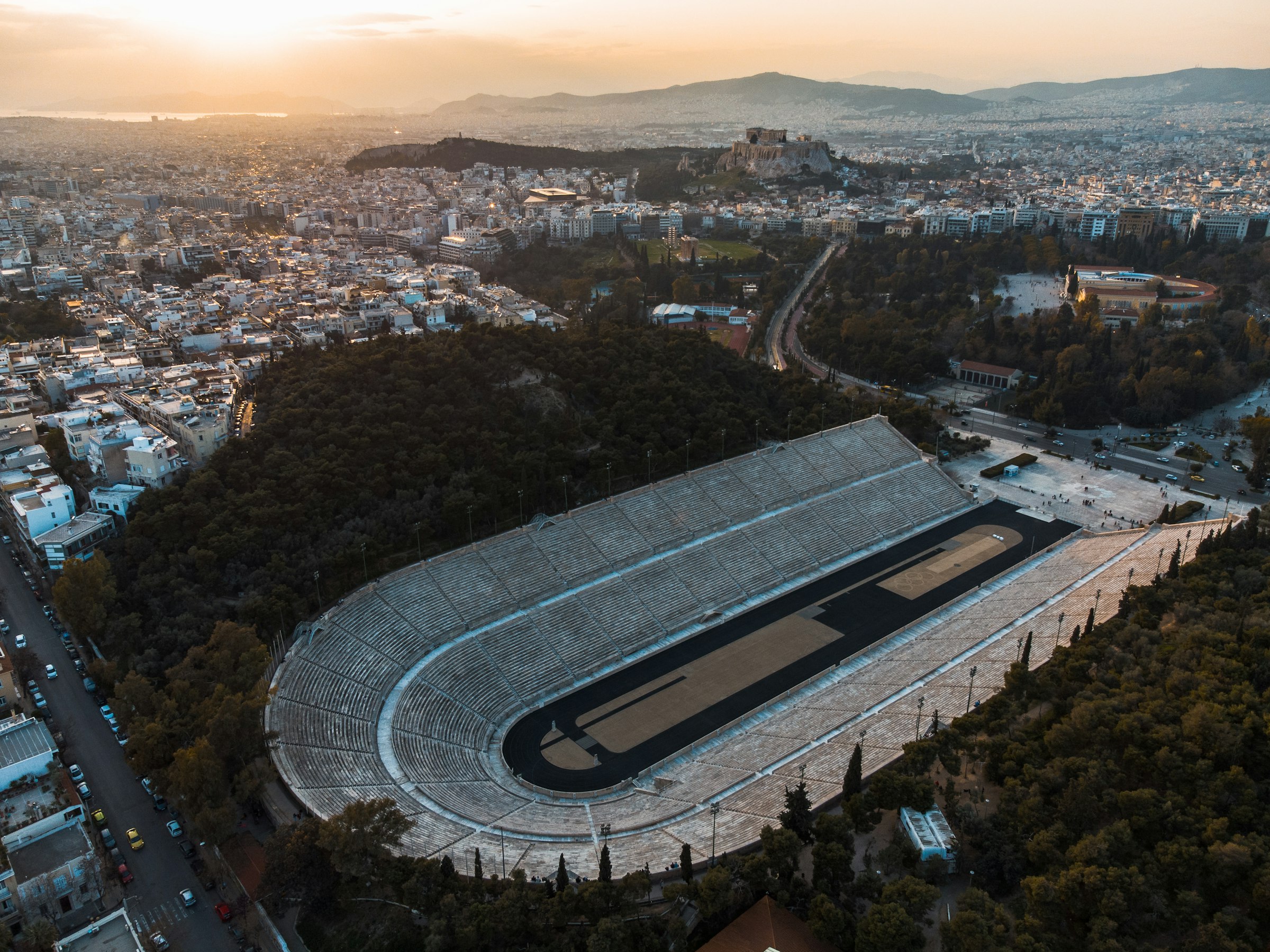
Athens, Greece · 8 Nov 2026
Round the burial mound at Marathon, south through Nea Makri, then a long climb inland and down into Athens to finish in the marble stadium of 1896.

Queenstown, New Zealand · 14 Nov 2026
Seventy percent hard-packed trail, between the Crown Range and the Remarkables, and no ballot to get in.