Men’s course record
2:00:35
Kelvin Kiptum · 2023
- Average pace
- 2:51 / km
- Terrain-adjusted
- +0.07 %
Europe15
Americas6
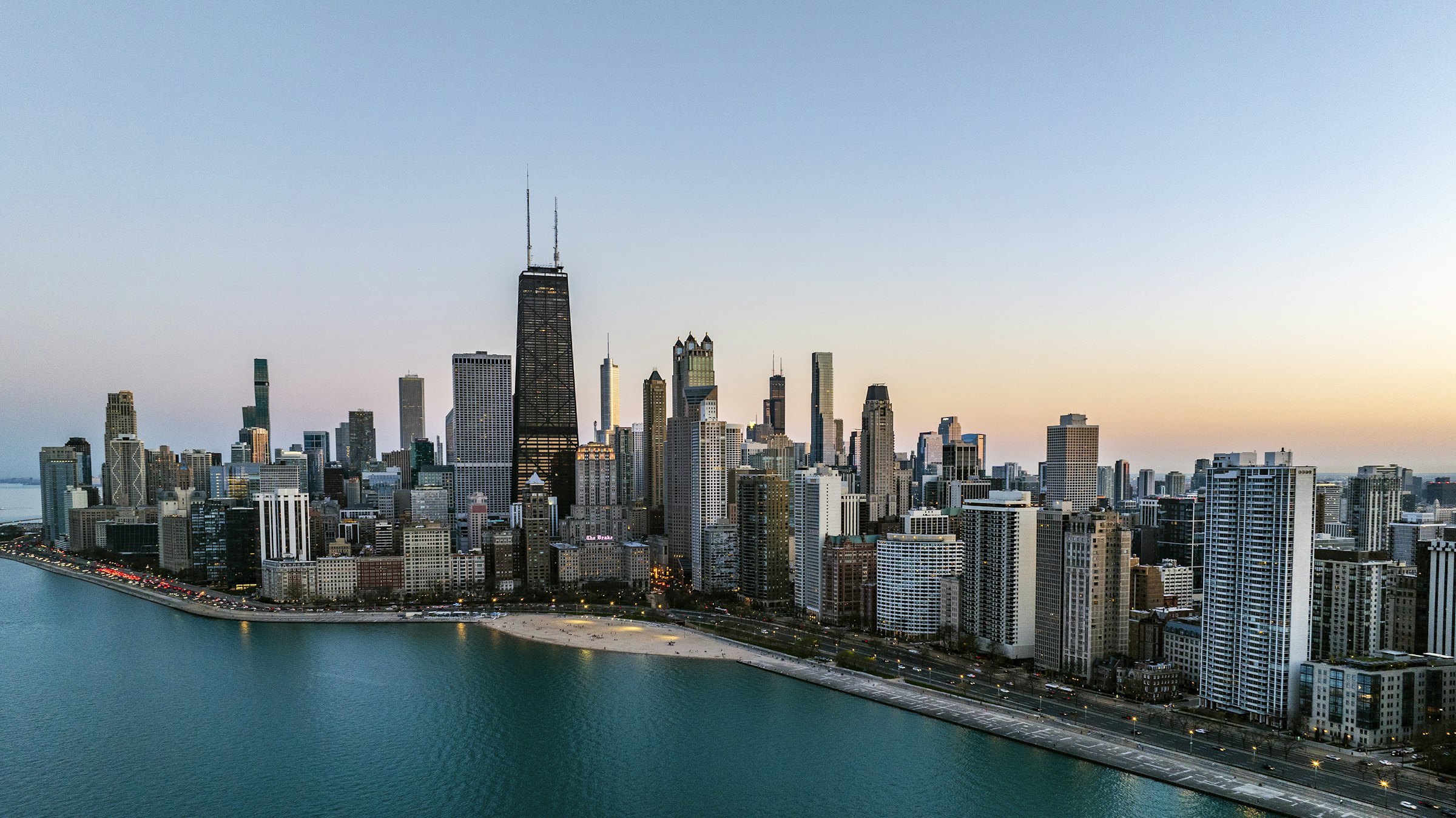


Chicago, USA The second Sunday in October Founded 1977
Seven world records on a loop through twenty-nine neighbourhoods.
Marathon Course · every marathon course, measured the same way
Chicago Marathon
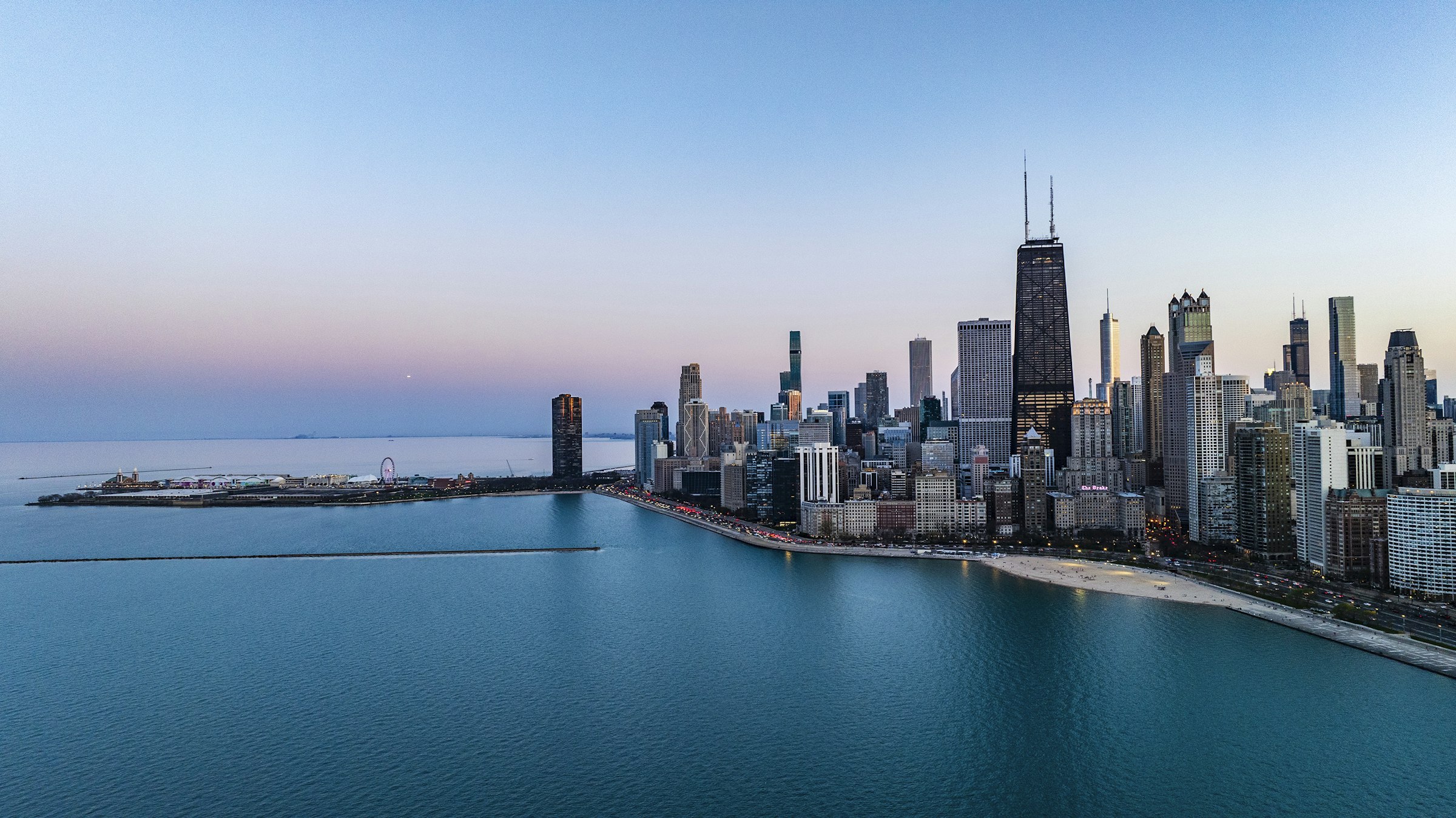
Seven world records on a loop through twenty-nine neighbourhoods. Grant Park, Chicago, Illinois, USA — start and finish.
Elevation · a sparse third-party line from 2025, map-matched onto the streets, so distances run long · USGS NED 10 m · smoothed 100 m 176–184 m
—
0.08.817.526.335.143.8
kmmi — elev — grade — hover or drag the profile
From 176 m at 0.8 km to 184 m at the finish, the entire course spans 8 m of height. No 5 km split changes by more than 3 m. The steepest climbing kilometre of the race gains 5 m, heading west on Adams Street out of an expressway underpass.
What shape there is comes from the river bridges and the highway underpasses; the ground itself is a lake plain and doesn't move. The finish is fractionally higher than the start, so the course gains 1 m overall and clears the World Athletics limit without argument.
Treat the kilometre marks on this page as approximate. Chicago's reference line has only 163 points, one every 0.3 km, and it wanders from side to side instead of following the road, so we map-matched it onto the street network before measuring. That put it on the right streets but made it 43.8 km long against a certified 42.195, about 3.9 % over. The matching also left one 440 m jump near 42.0 km and three stretches it couldn't match at all. The heights are sound, and a 4 % stretch doesn't change how flat the course is. Add up the energy cost of every gradient and the course comes out about level with a flat 42.195 km.
Take it with you
Course GPX Organiser's course map
The GPX is ours: our resampled line, a point every 25 m, carrying USGS NED 10 m elevation rather than the GPS noise a watch file usually holds.
USGS NED 10 m, a sparse third-party line from 2025, map-matched onto the streets, so distances run long, smoothed 100 m · marathoncourse.com/marathons/chicago/ · checked 2026-09-23
19801990200020102020
Pace is derived from the certified distance. Terrain-adjusted figures come from the same model that ranks every course on this site.
Men’s course record
2:00:35
Kelvin Kiptum · 2023
Women’s course record
2:09:56
Ruth Chepngetich · 2024
The morning, hour by hour
The 2025 wave structure. Check the organiser for 2026 assignments.
Race-day mean temperature, 1995-2025. Lime marks the hottest edition; the coldest and wettest carry a label only, so the colour still means one thing.
Of the Majors, yes, and not by a little. The whole course sits within 8 m of vertical range, from 176 m to 184 m; Berlin, the flat course everyone names, has 21 m. Of the 28 courses compared it's third. Amsterdam and the Gold Coast are each flatter by half a metre or less, and neither is a Major. The ground under Chicago is a lake plain, so the only relief on the course comes from bridges and expressway underpasses.
USGS NED 10 m lidar, sampled every 25 m, smoothed over 100 m. Raw-to-smoothed ratio 1.39.
Sound for height, about 4 % out for distance. The published reference file carries only 163 points, one every 0.3 km, which is too sparse to sample elevation against, so it was map-matched onto the street network first. The matched line runs 43.8 km against a certified 42.195. The heights hold and so does the flatness, but treat the kilometre marks on this page as approximate.
Our own measurement, against the certified distance.
Seven times, more than anywhere but Berlin. Steve Jones in 1984, Khalid Khannouchi in 1999, Catherine Ndereba in 2001 and Paula Radcliffe in 2002. Then Brigid Kosgei in 2019, Kelvin Kiptum with 2:00:35 in 2023 and Ruth Chepngetich with 2:09:56 in 2024. Kiptum's stood until Sabastian Sawe ran under two hours at London in 2026; Chepngetich's is still the women's world record. She was banned for three years in 2025 after a positive test dated March 2025. The ruling left earlier performances official, so the record stands, and the integrity unit says its wider investigation continues.
World Athletics record progression and Athletics Integrity Unit rulings, checked September 2026.
Roughly one in four on the usual arithmetic, and that's generous. The 55,000 places it divides into include charity, time-qualifier, legacy and tour-operator entries that never go near the drawing, so the true lottery rate is worse than one in four. New York accepted about one per cent in 2026, and London's latest ballot took 1.34 million applications. Third-party estimates for Berlin run from one in five to one in three, and Sydney's draw came out at roughly one in three.
Third-party reporting; the organiser publishes no acceptance rate.
Hot enough to have stopped the race once. The 2007 edition was halted mid-course at 31 °C. A runner died that day; the medical examiner put it down to a heart condition, not the heat. The median temperature during the race window is 14.4 °C, but treat that series with care. It samples the second Sunday in October every year, and Chicago's race date has moved around: 2007 was run on the first Sunday and 1999 on the fourth. So the older years describe today's date, not past race days.
ERA5 reanalysis sampled on the second Sunday in October, 1995–2025. The rule does not reproduce the historical race date in every year, and the 31 °C figure for 2007 comes from the race record, not from this series.
More than 55,000 took a marathon place in 2026.
Organiser figures for the 2026 edition.
About 14.4 °C during a typical race: that's the median across 29 years, which have run from 4.4 °C to 21.4 °C. 3 of the 29 were wet.
ERA5 reanalysis for the race date, 1995-2025.
The course finishes 1 m above where it starts, so a Chicago time goes to the B.A.A. untouched. Its downhill adjustment only begins at 1,500 ft of net loss.
Net drop +1 m from this site's course line; 2027 adjustment None. Certification platinum label: World Athletics Platinum Label; record-eligible, and seven world records have been ratified on it.
It comes from USGS NED 10 m, sampled every 25 m along the course line and smoothed over 100 m. The raw-to-smoothed ratio here is 1.39. Around 1.3 means the model is reading the ground, not rooftops; above about 2.0 the total climb carries real noise, and the net change is the sturdier number.
0 missing samples · 2 bridge spans corrected.
| Fact | Source | Verified |
|---|---|---|
| Course line | Third-party GPX for the 2025 edition. It carries 163 points — one every 263 m — which is too sparse to sample elevation against, so the line was map-matched onto the OpenStreetMap street network first. That gives the right streets and a length 3.9 % over the certified 42.195 km, so distances on this page are approximate. The matching left one 440 m jump near km 42 and three stretches it could not match. A denser independent file would let us drop the matching and re-measure. | 2026-09-20 |
| Elevation | USGS NED 10 m lidar via OpenTopoData, sampled every 25 m, smoothed over 100 m. Raw-to-smoothed gain ratio 1.39, which is clean. Two bridge spans corrected. A 4 % along-course stretch cannot manufacture or hide 8 m of range, so the flatness finding survives it. The lateral risk is the real one — a matched line routed onto the wrong level of a multi-level street would show — and the low point of 175.8 m at km 0.85 sits on Columbus Drive, which has upper and lower roadways, slightly below Lake Michigan's surface. Treat the range as good to a metre or two rather than to a decimal. | 2026-09-20 |
| Race-day weather | ERA5 reanalysis via the Open-Meteo archive, the second Sunday in October 1995–2025 at the Grant Park start, 07:00–15:00 local. 2020 and 2021 excluded. | 2026-09-23 |
| Course records | Seven world records: Jones 1984, Khannouchi 1999, Ndereba 2001, Radcliffe 2002, Kosgei 2019, Kiptum 2023 and Chepngetich 2024. Chepngetich's 2:09:56 was ratified in December 2024 and still stands; she was banned for three years in 2025 over a test dated March 2025, with earlier performances left official. | 2026-09-23 |
| Entry and field | Drawing opened 21 October 2025, closed 18 November, drawn 11 December for the 2026 race. US$250 for US residents, US$260 for others. Field reported as more than 55,000. The one-in-four figure divides places by applications; the organiser publishes no acceptance rate. | 2026-09-23 |
| Record eligibility | World Athletics Competition Rules, Book C, Part III — Competition Rule 31.21: a record course may lose no more than 1 m per kilometre, and its start and finish may be no more than 21.098 km apart. Chicago gains 1.3 m overall and its start and finish are 1.22 km apart. Inside both. | 2026-09-23 |
Until the Chicago Marathon · 11 Oct 2026
— days
— hrs— min— sec
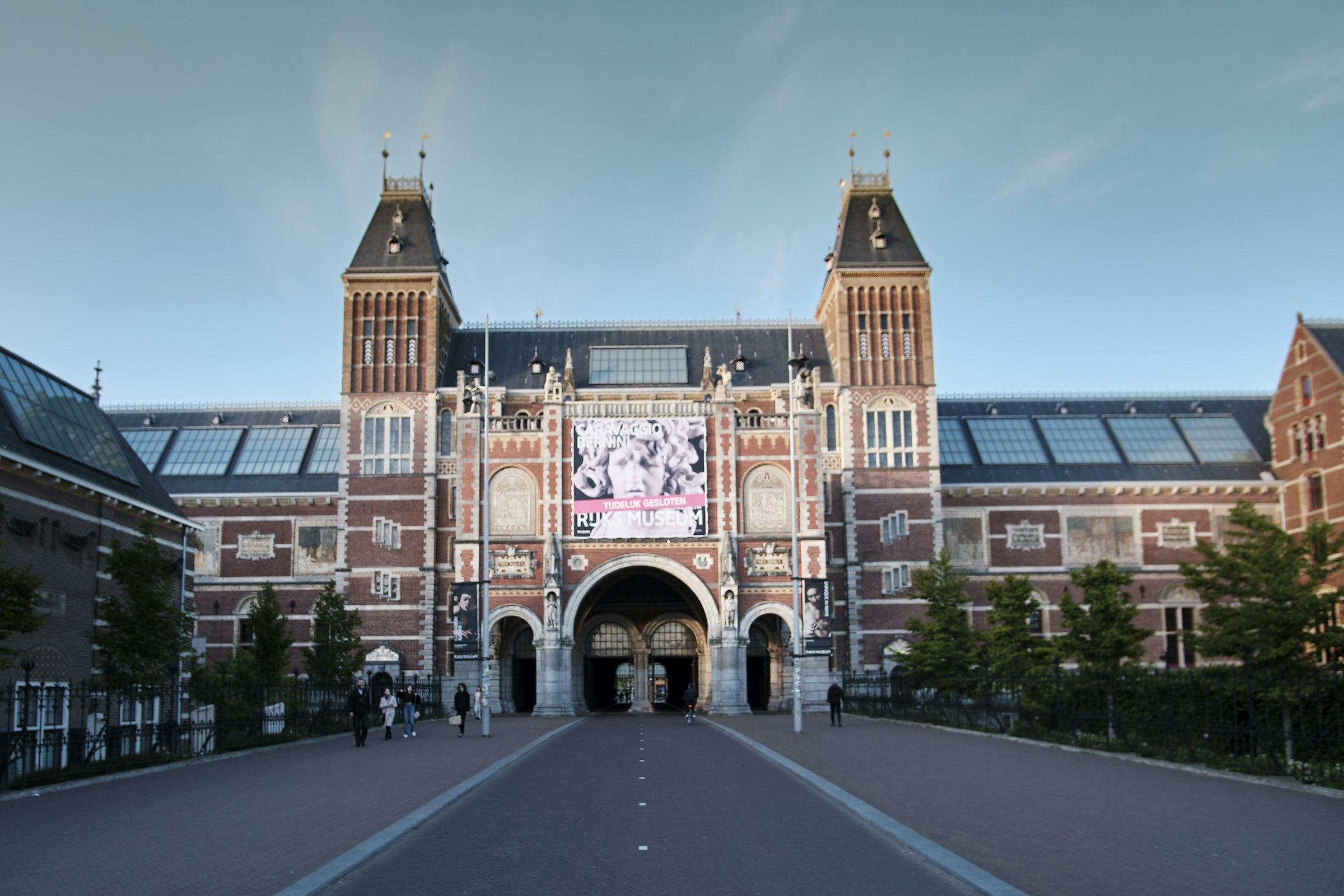
Amsterdam, Netherlands · 18 Oct 2026
From the 1928 Olympic Stadium, through the Rijksmuseum and twelve kilometres out along the Amstel.

Toronto, Canada · 18 Oct 2026
Canada's biggest marathon spends most of the morning on the shore of Lake Ontario.
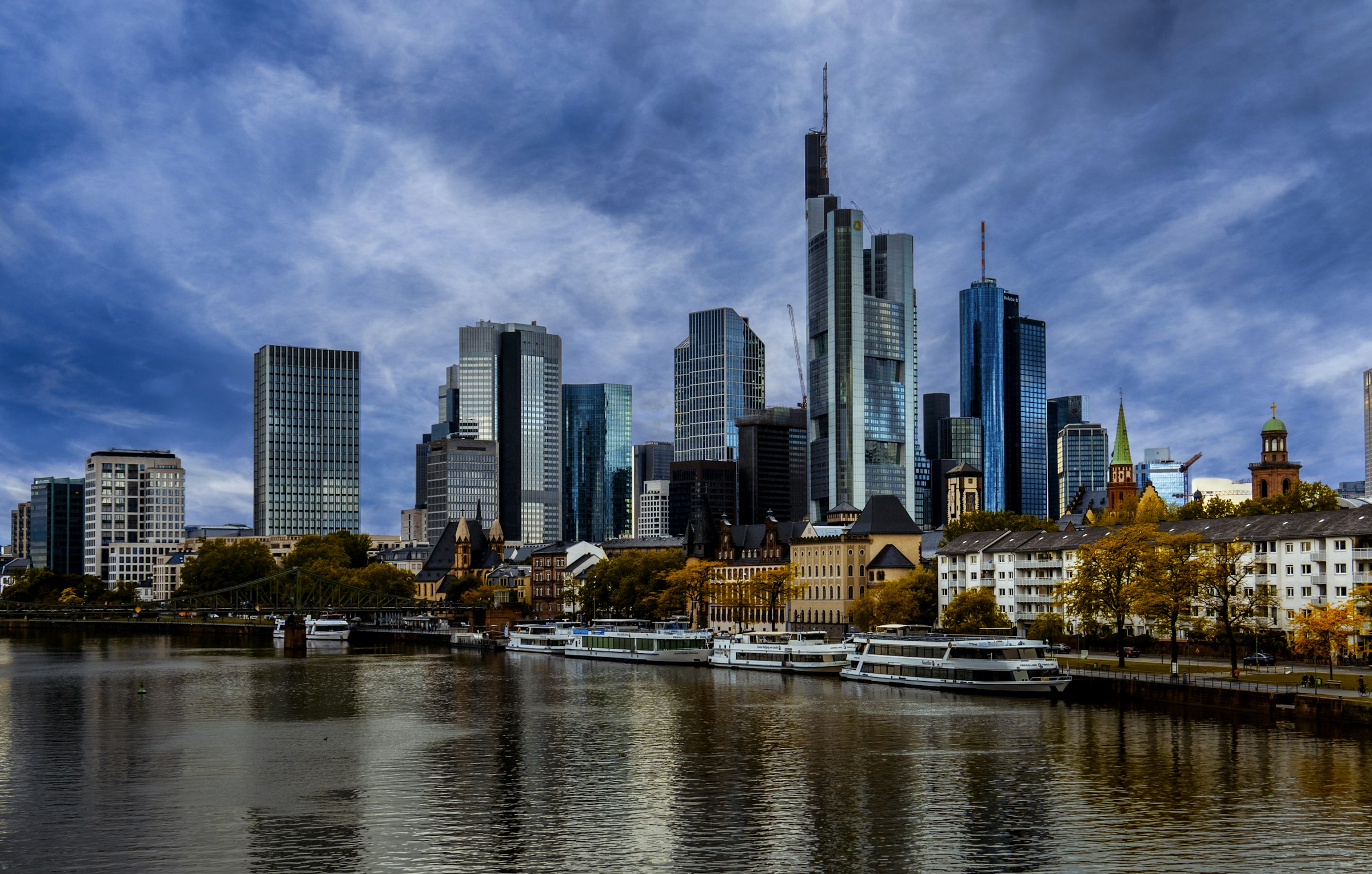
Frankfurt, Germany · 25 Oct 2026
Twice across the Main and out to Höchst, then home to a red carpet inside the Festhalle.