Men’s course record
2:03:46
Amos Kipruto · 2025
- Average pace
- 2:56 / km
- Terrain-adjusted
- +0.15 %
Europe15
Americas6
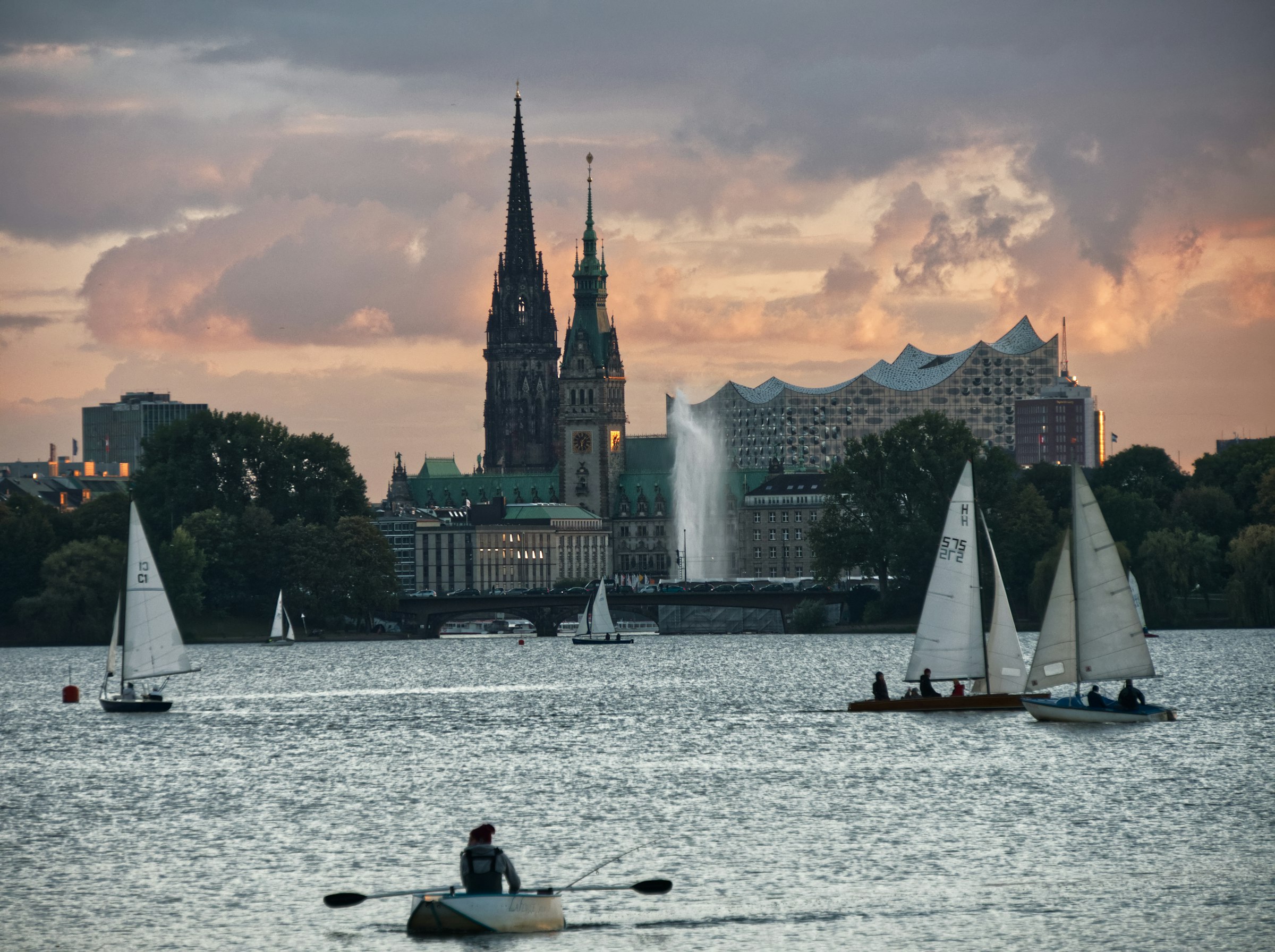
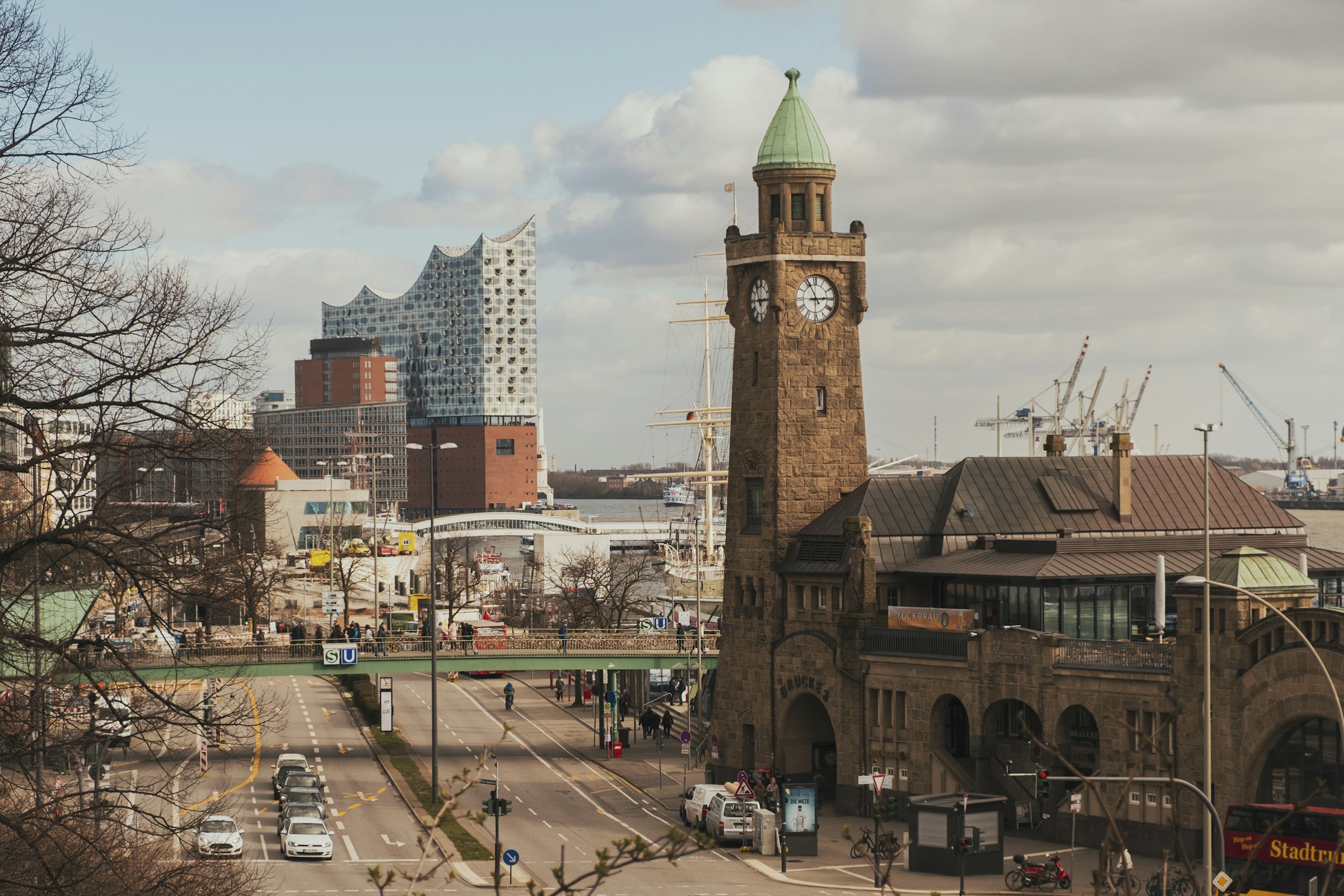
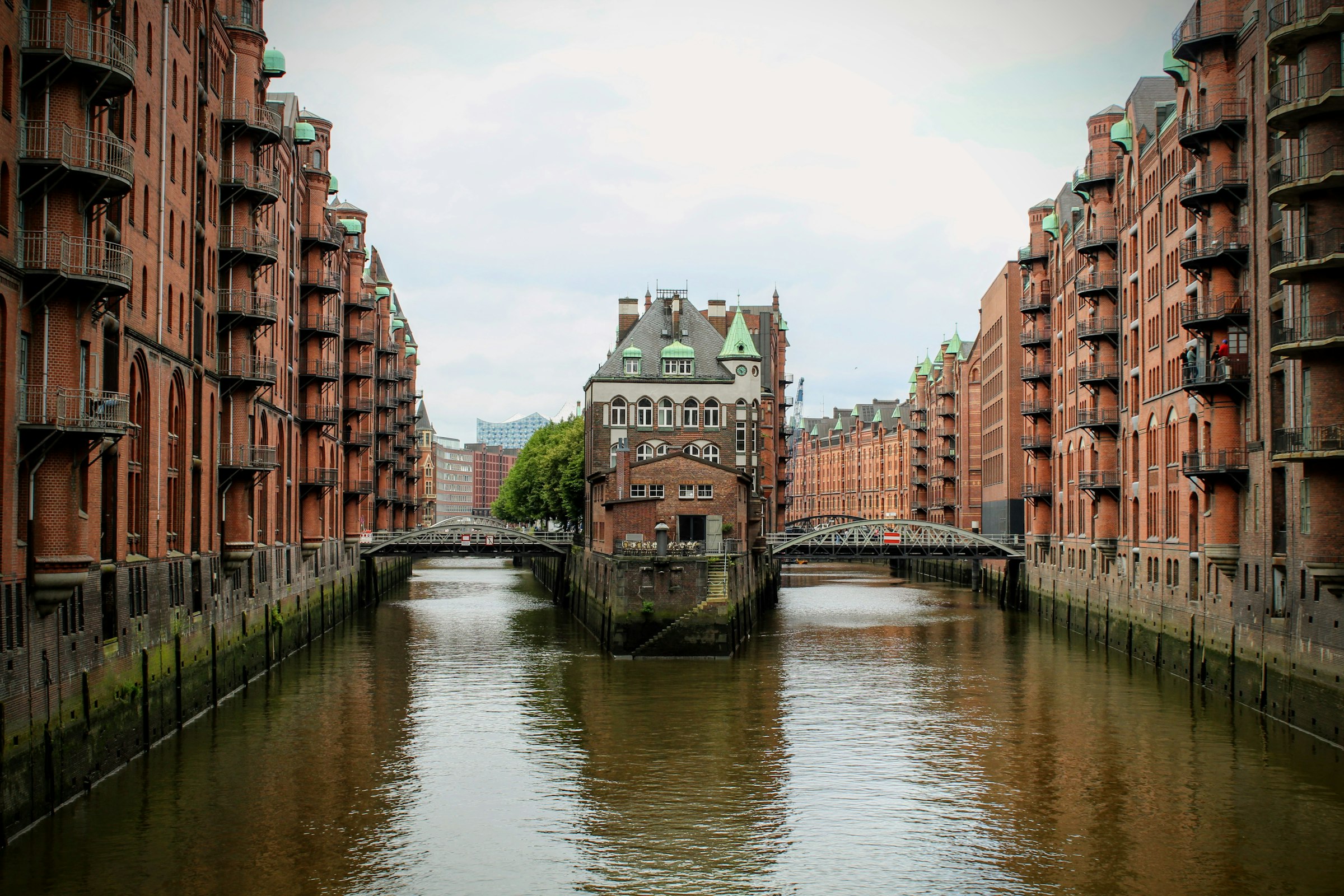
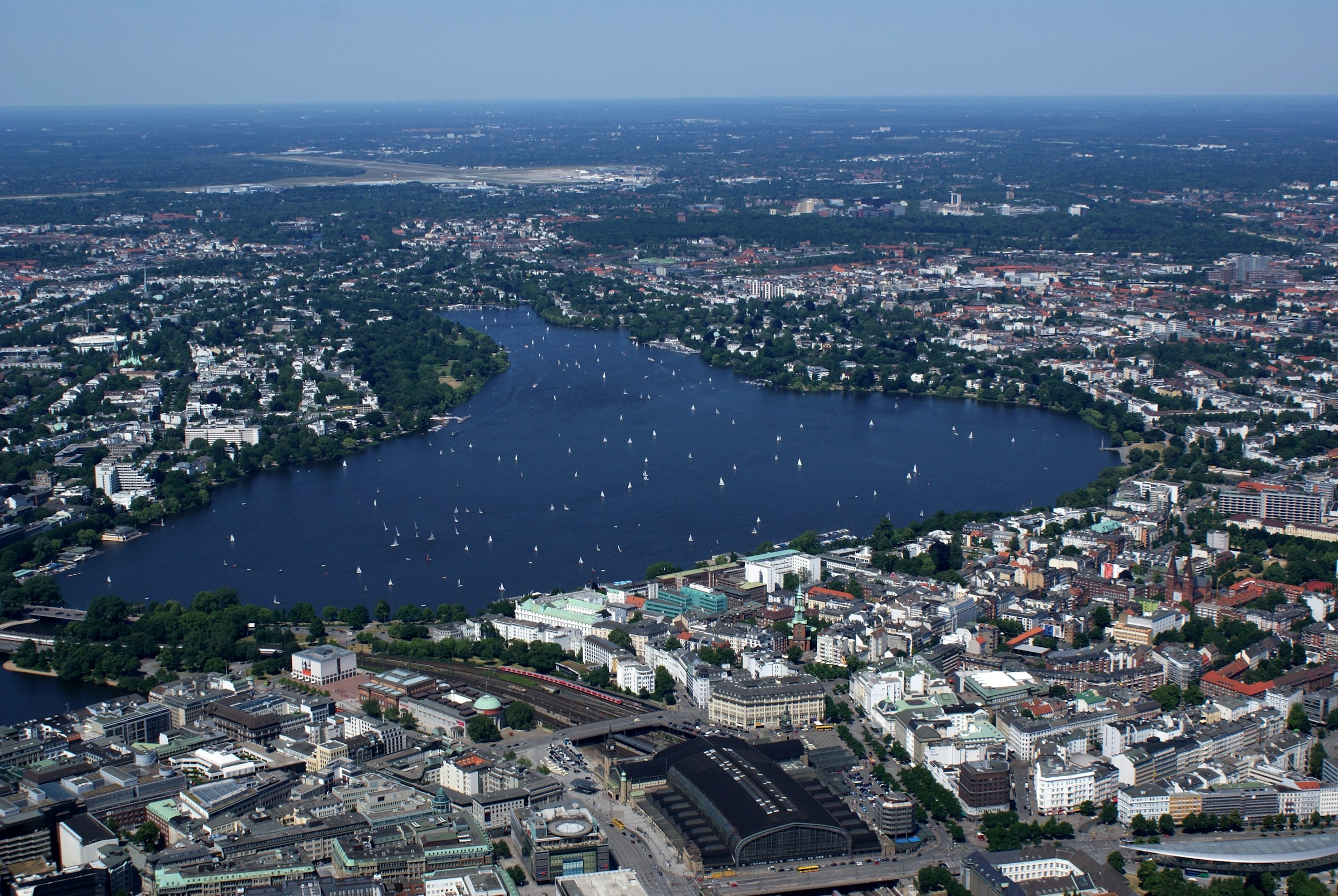
Hamburg, Germany The fourth Sunday in April Founded 1986
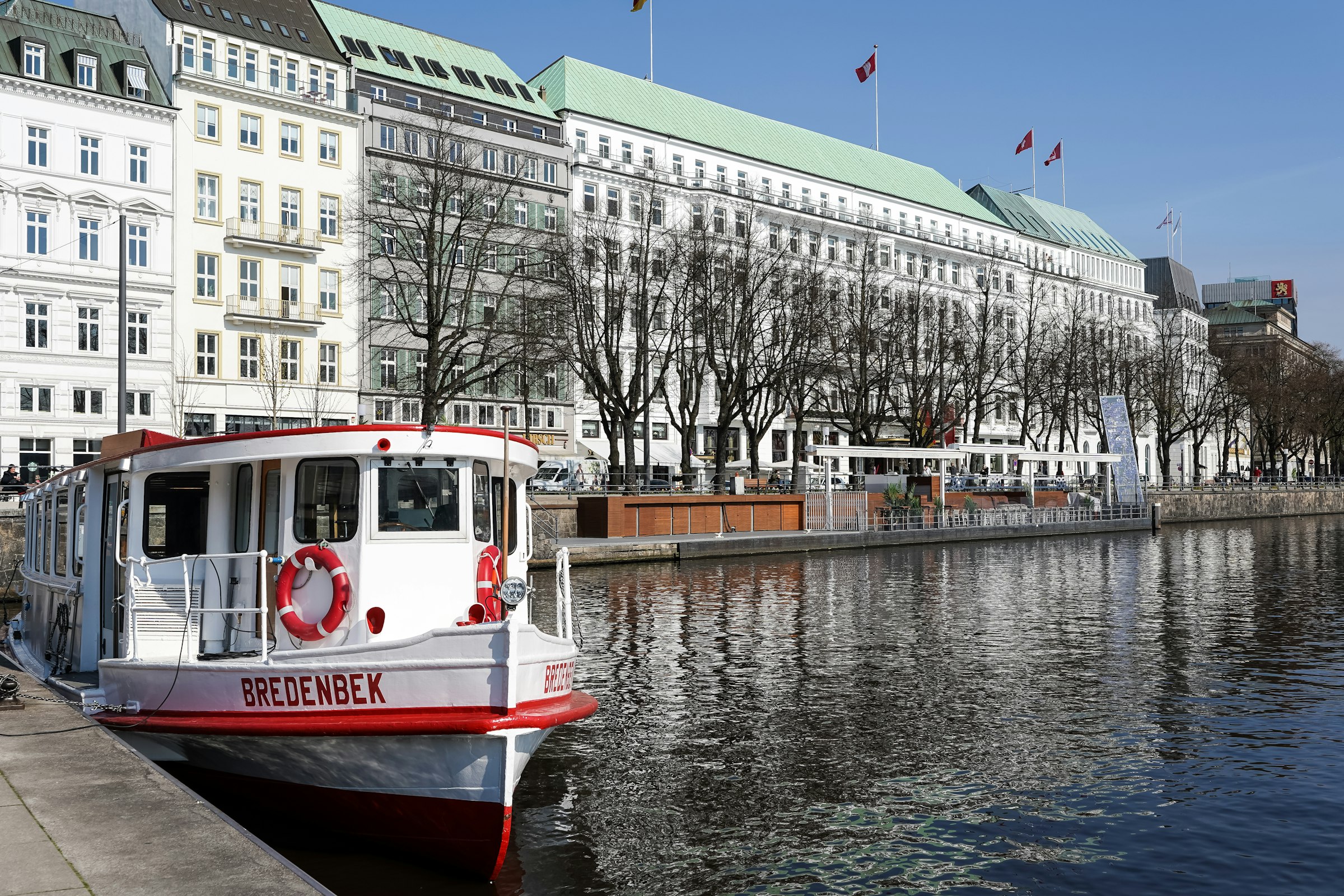
Down the Reeperbahn to the harbour, then round the Alster and north to Ohlsdorf before the long run home to the Messe.
Marathon Course · every marathon course, measured the same way
Hamburg Marathon
Down the Reeperbahn to the harbour, then round the Alster and north to Ohlsdorf before the long run home to the Messe. Karolinenstraße → Karolinenstraße, Hamburg, Germany.
Elevation · measured on a course line for the 2026 edition · Sonny 1" .hgt tiles — CC BY 4.0 · smoothed 100 m 4–40 m
—
0.08.517.025.534.042.5
kmmi — elev — grade — hover or drag the profile
The hills are all in the first 10.4 km. From the start, at 16 m, the course runs down the Reeperbahn, then climbs 18 m in a kilometre from its end at 2.2 km, up into Altona. That's the steepest climbing kilometre of the race. For the next 6.0 km, out to the west and back, it stays between 29 m and 40 m.
Then comes the drop. Past the Altonaer Balkon the course loses 26 m in a kilometre, the steepest of the race, and reaches the river at the Fischmarkt at 10.4 km. From there to the finish it stays under 21 m. The low point, 4 m at 19.9 km, is beside the Außenalster.
What's left is gentle: a climb of 13 m out of Winterhude from 21.4 km, and another of 12 m from Dammtor in the last 1.5 km. The chart draws the Wallringtunnel, just after 14.0 km, as a straight line, because the elevation model reads the street above it instead of the road through it. Add up the energy cost of every gradient and, for a three-hour runner, the course comes out about 18 seconds slower than a flat 42.195 km (0.15 %).
Take it with you
Course GPX Organiser's course map
The GPX is ours: our resampled line, a point every 25 m, carrying Sonny 1" .hgt tiles — CC BY 4.0 elevation rather than the GPS noise a watch file usually holds.
Sonny 1" .hgt tiles — CC BY 4.0, measured on a course line for the 2026 edition, smoothed 100 m · marathoncourse.com/marathons/hamburg/ · checked 2026-09-24
1990200020102020
Pace is derived from the certified distance. Terrain-adjusted figures come from the same model that ranks every course on this site.
Men’s course record
2:03:46
Amos Kipruto · 2025
Women’s course record
2:17:05
Brillian Kipkoech · 2026
The morning, hour by hour
The organiser's 2027 participant information; the finish closing time is 2026's. Germany is on summer time by late April. No intermediate cut-offs are published. The marathon closes six hours after the last runner crosses the start line, which in 2026 put the close at 3:15pm. Handcyclists and wheelchair racers have three and a half hours.
Race-day mean temperature, 1995-2025. Lime marks the hottest edition; the coldest and wettest carry a label only, so the colour still means one thing.
After the first 10.4 km, nearly. The hills are in Altona, where the course climbs to 40 m and then drops 26 m in a kilometre to the Fischmarkt. From there it stays under 21 m. It climbs 156 m in all.
Sonny's LiDAR DTM of Europe, sampled every 25 m, smoothed over 100 m. Raw-to-smoothed ratio 1.74.
Possibly. On 24 September 2026 the organiser said 1,000 marathon places were left, at €135. The half marathon and the relay sold out in the spring. A registered runner can also pass you their place, for a €25 fee.
The organiser's news and transfer pages, checked 24 September 2026.
€135 for 2027. Medal engraving costs €11 booked with your entry, or €13 in cash on the day.
The organiser's 2027 fee chart and participant information.
Yes. Amos Kipruto ran 2:03:46 here in 2025, and Brillian Kipkoech 2:17:05 in 2026. The early start helps too: the median temperature across the race hours is 12 °C.
The organiser's race reports for 2025 and 2026; ERA5 race-day climatology.
On Karolinenstraße, beside the Messe, at 8:30am for blocks A to L. Blocks M to Q start from 9:00 on Bei den Kirchhöfen, a few hundred metres east. Everyone finishes on Karolinenstraße.
The organiser's 2027 participant information.
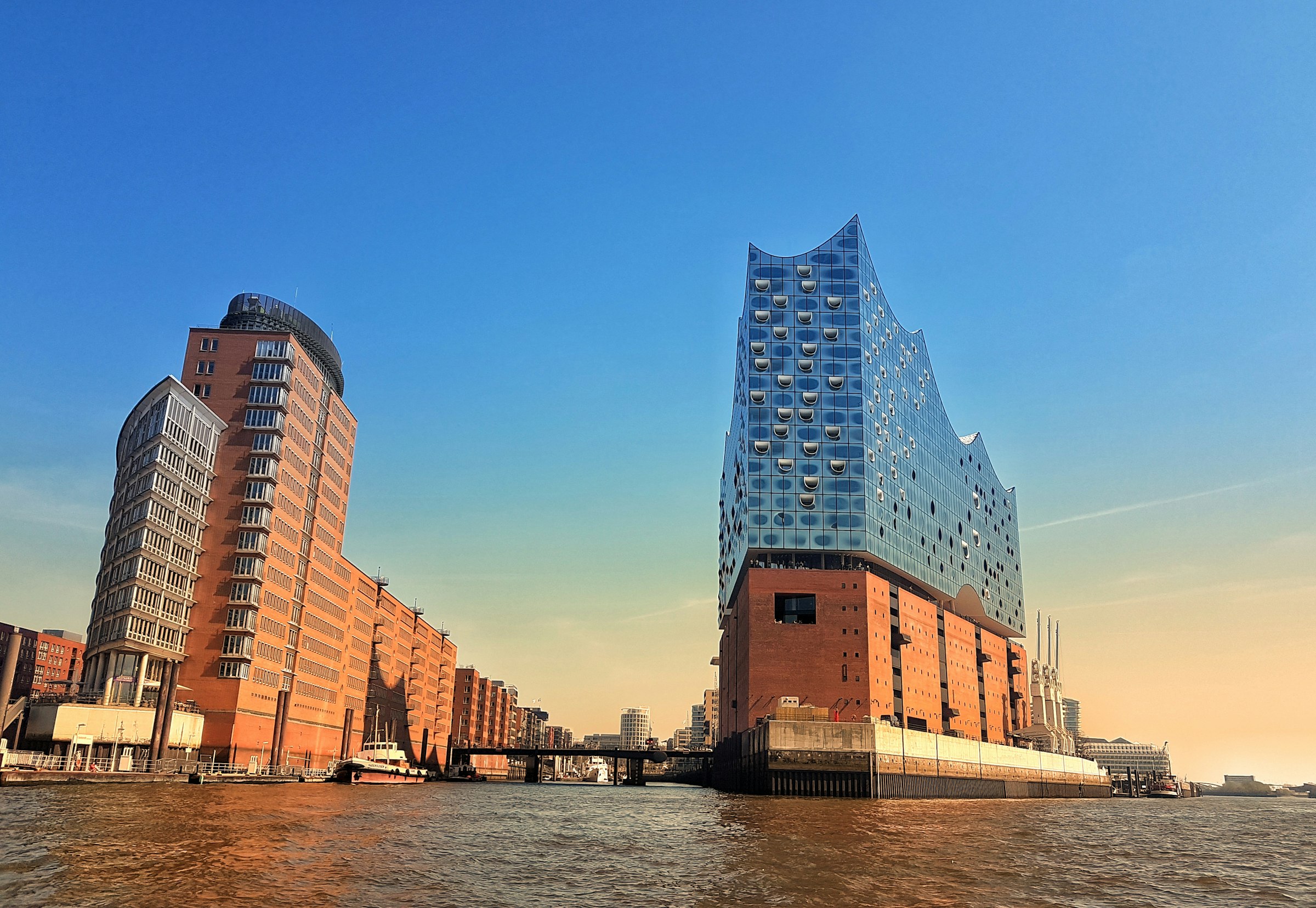
Not right past it. The course runs along the harbour front between the Landungsbrücken and the Speicherstadt, and at about 12.3 km the concert hall is some 350 m away, in view.
This site's course line.
No. Take the U2 to Messehallen, or the U3 or S-Bahn to Sternschanze, and buy a ticket.
The organiser's 2027 participant information.
Ride back with one of the medical vehicles at the back of the field, or take the U-Bahn to the finish at Karolinenstraße.
The organiser's 2027 participant information.
It would. The start and finish are the same spot on Karolinenstraße, at the same height, so the course passes both World Athletics tests with room to spare.
Hamburg's start, finish and net drop from the course line, against World Athletics Competition Rule 31.21.
A record 20,000 entered the marathon in 2026, and about 15,500 finished.
Organiser figures for the 2026 edition.
About 12.2 °C during a typical race: that's the median across 29 years, which have run from 4.7 °C to 17.4 °C. 6 of the 29 were wet.
ERA5 reanalysis for the race date, 1995-2025.
It counts. The start and finish are both on Karolinenstraße, at the same height, and the course is certified, so the B.A.A.'s downhill adjustment, which begins at 1,500 ft of net loss, has nothing to act on. The hills are in the first 10.4 km, and the rest is close to flat. Save something for the last 1.5 km, which climb 12 m from Dammtor to the finish.
Net drop +0 m from this site's course line; 2027 adjustment None. Certification unconfirmed: A World Athletics Gold Label race in 2009, 2013 and 2020; its 2026 label is not confirmed here.
It comes from Sonny 1" .hgt tiles — CC BY 4.0, sampled every 25 m along the course line and smoothed over 100 m. The raw-to-smoothed ratio here is 1.74. Around 1.3 means the model is reading the ground, not rooftops; above about 2.0 the total climb carries real noise, and the net change is the sturdier number.
0 missing samples · 5 bridge spans corrected.
| Fact | Source | Verified |
|---|---|---|
| Course line | Third-party GPX for the 2026 edition. It follows the organiser's own 2026 file to within 40 m everywhere, and the organiser's pages for 2027 describe the same course. The file measures 42.679 km, 1.15 % long, from 940 points; our resampled line measures 42.540 km, so distances on this page run about 0.8 % long. Archived with its hash in data/raw/sources. | 2026-09-24 |
| Elevation | Sonny's LiDAR DTM of Europe (CC BY 4.0), sampled every 25 m, smoothed over 100 m. Raw-to-smoothed gain ratio 1.74. Five spans the model misread were straightened between their ends: four bridges it read from underneath, including the Kennedybrücke, and the Wallringtunnel, from 14.2 to 14.7 km, where it reads the street above instead of the road through it. | 2026-09-24 |
| Elevation, independent check | The organiser publishes no climb figure, but its own 2026 course file carries heights from 2 m to 39 m, a range of 37 m. We measure 4.0 m to 40.2 m, a range of 36.2 m. | 2026-09-24 |
| Race-day weather | ERA5 reanalysis via the Open-Meteo archive, 1995–2025 at the start, 08:00–14:00 local, sampled on the fourth Sunday in April. That reproduces every date from 2022 to 2027, but not every earlier one: some older races were a week earlier or later. 2020 and 2021, when there was no April race, are excluded. | 2026-09-24 |
| Course records | Amos Kipruto 2:03:46 (2025) and Brillian Kipkoech 2:17:05 (2026), from the organiser's race reports. The 2026 men's winner, Othmane El Goumri, ran 2:04:24. | 2026-09-24 |
| Entry and field | The organiser's 2027 registration page: €135, with an earlier cheaper tier sold out. 1,000 marathon places were left on 24 September 2026. A record 20,000 entered the 2026 marathon; results services put the finishers at about 15,500. | 2026-09-24 |
| Race day | The organiser's 2027 participant information: handcyclists and wheelchair racers 8:25am, blocks A–L from 8:30am on Karolinenstraße, blocks M–Q from 9:00am on Bei den Kirchhöfen, and a limit of six hours from the last runner's start. The finish closing time is from the 2026 programme. | 2026-09-24 |
| Record eligibility | World Athletics Competition Rules, Book C, Part III — Competition Rule 31.21: a record course may lose no more than 1 m per kilometre, and its start and finish may be no more than 21.098 km apart. Hamburg starts and finishes in the same place, less than a metre apart, and gains 0.2 m overall. Inside both. | 2026-09-24 |
Until the Hamburg Marathon · 25 Apr 2027
— days
— hrs— min— sec
Big Sur, USA · 25 Apr 2027
Twenty-six miles of Highway 1 with the Pacific on one side and no way out on the other.

Prague, Czech Republic · 2 May 2027
Across the Charles Bridge in the first three kilometres, along both banks of the Vltava, and through Old Town Square three times.
Copenhagen, Denmark · 9 May 2027
Over the harbour to Christianshavn and back, out through Nørrebro and Frederiksberg, and home by Kongens Nytorv and Nyboder to Øster Allé.