Men’s course record
2:10:10
Nigussie Sahlesilassie · 2019
- Average pace
- 3:05 / km
- Terrain-adjusted
- +0.29 %
Europe15
Americas6
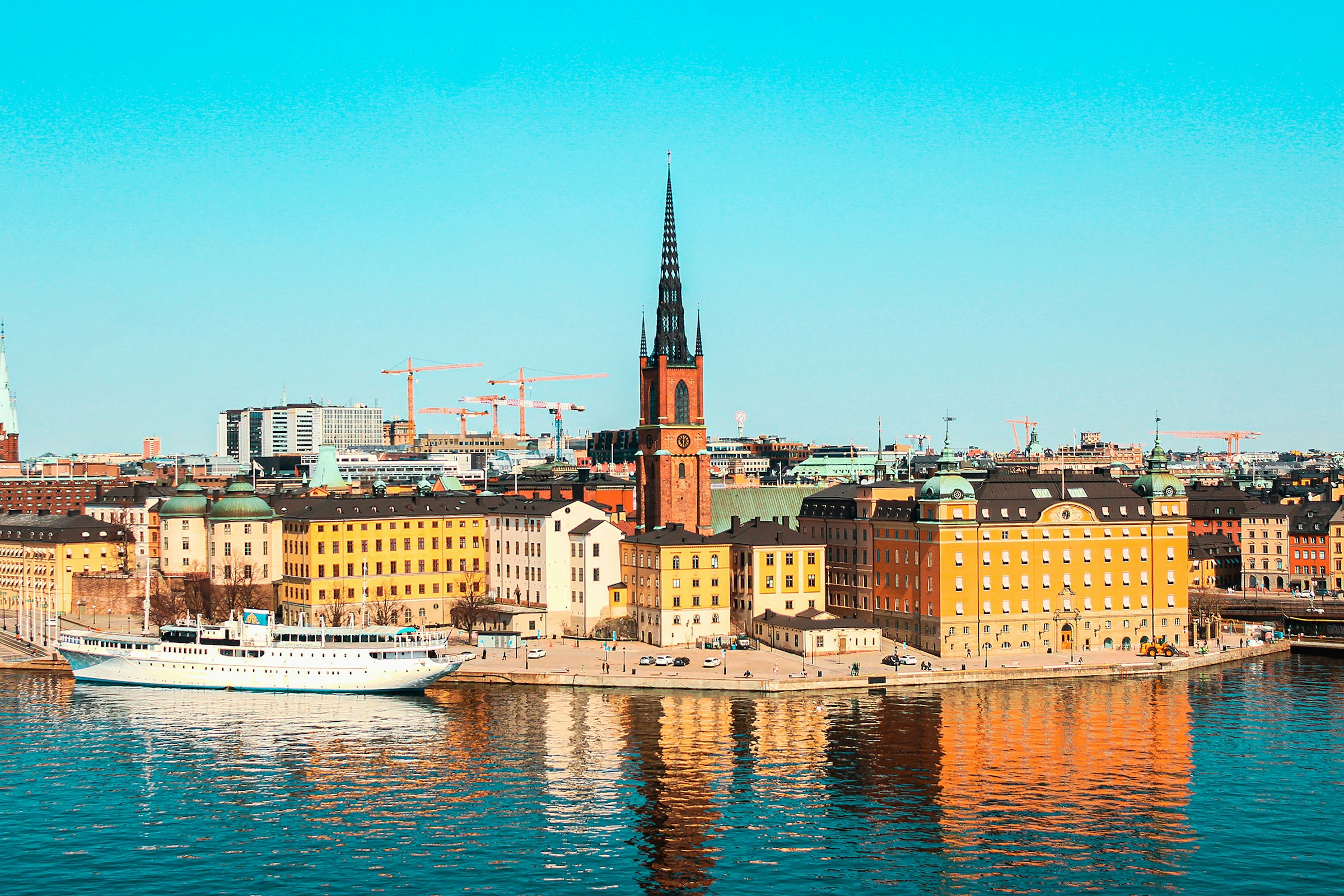
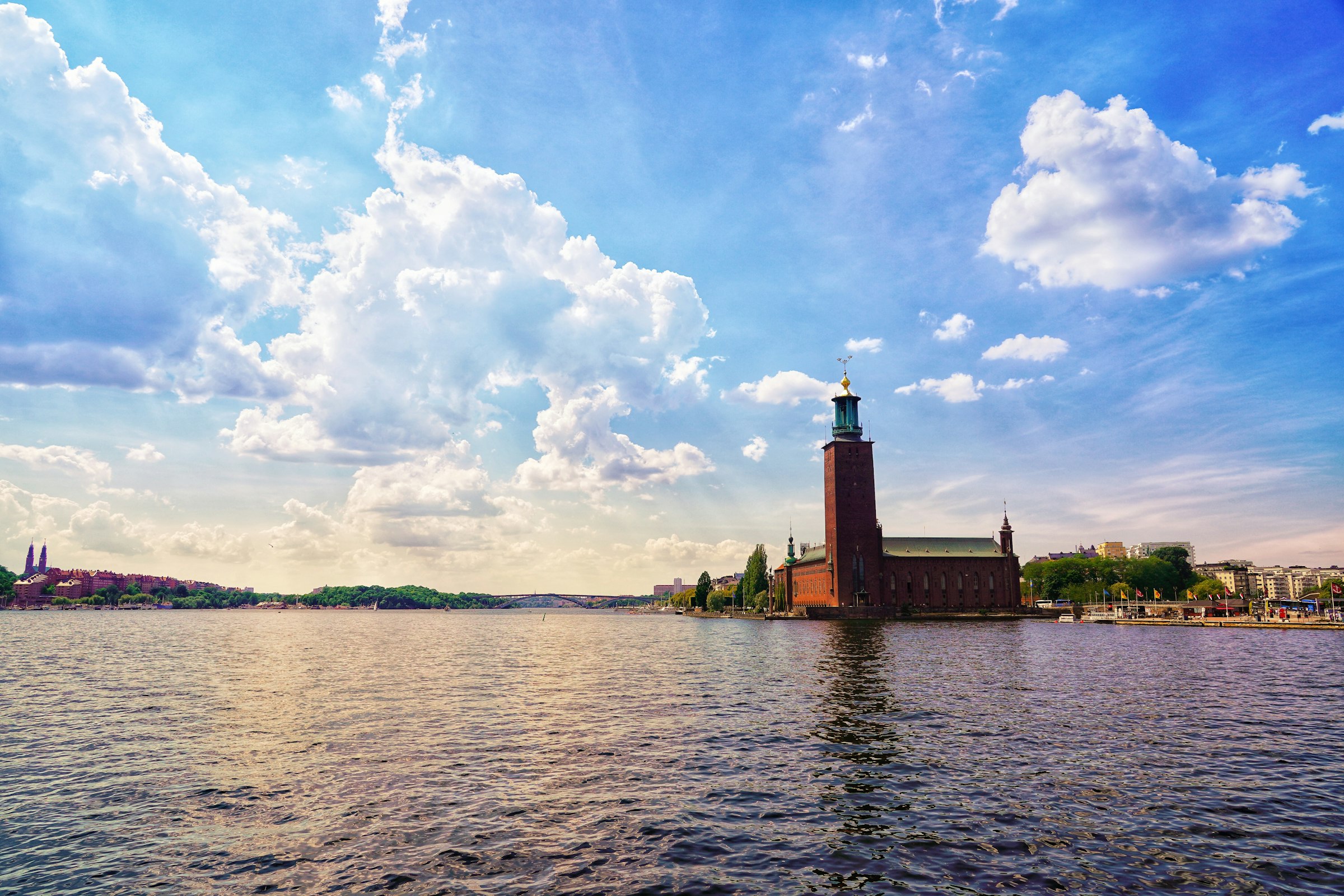

Stockholm, Sweden The Saturday nearest 1 June Founded 1979
From the Olympic stadium round Gamla stan and out to Djurgården, then up onto Södermalm and over Västerbron before the finish on the 1912 track.
Marathon Course · every marathon course, measured the same way
Stockholm Marathon
From the Olympic stadium round Gamla stan and out to Djurgården, then up onto Södermalm and over Västerbron before the finish on the 1912 track. Lidingövägen → Stockholms Stadion, Stockholm, Sweden.
Elevation · measured on a course line for the 2026 edition · Sonny 1" .hgt tiles — CC BY 4.0 · smoothed 100 m 1–38 m
—
0.08.517.025.634.142.6
kmmi — elev — grade — hover or drag the profile
The start, at 25 m, is high ground for the first half. The course runs down Odengatan and Sveavägen to the water and reaches the water's edge, its lowest ground, at about 4.8 km. After a flat loop round Gamla stan it climbs Narvavägen and Sturegatan to 22 m on Valhallavägen, then rolls over the small rise at Manilla on Djurgården.
The harder climbs are in the second half. From Slussen at 21.3 km, Katarinavägen climbs 29 m in a kilometre, the steepest climbing kilometre of the race. Past Zinkensdamm, Lundagatan takes the course to its high point, 38 m at 26.9 km. The next kilometre drops 24 m towards Västerbron.
Then comes Västerbron, at 28.0 km. The elevation model reads the water under a bridge, so the chart draws the deck as an arch up to the bridge's clearance of 26 m: a climb of about 12 m from the Södermalm shore, and back down to Kungsholmen.
Kungsholmen adds one more rise, up Hantverkargatan and Fleminggatan from 3 m by the Stadshuset to 18 m. Then it's downhill beside the railway to Centralen and flat round Gamla stan. The last climb is 20 m, from Strandvägen up Narvavägen and Sturegatan to the stadium. Add up the energy cost of every gradient and, for a three-hour runner, the course comes out about 30 seconds slower than a flat 42.195 km (0.29 %).
Take it with you
Course GPX Organiser's course map
The GPX is ours: our resampled line, a point every 25 m, carrying Sonny 1" .hgt tiles — CC BY 4.0 elevation rather than the GPS noise a watch file usually holds.
Sonny 1" .hgt tiles — CC BY 4.0, measured on a course line for the 2026 edition, smoothed 100 m · marathoncourse.com/marathons/stockholm/ · checked 2026-09-25


19801990200020102020
Pace is derived from the certified distance. Terrain-adjusted figures come from the same model that ranks every course on this site.
Men’s course record
2:10:10
Nigussie Sahlesilassie · 2019
Women’s course record
2:28:24
Grete Waitz · 1988

The morning, hour by hour
Cut-offs
The organiser's 2026 participant information. The 2027 times aren't out yet, and the organiser calls the noon start preliminary. Sweden is on summer time by late May. The 2026 cut-offs, at the organiser's own kilometre marks. They're clock times and apply whichever wave you started in. The limit is six and a half hours under the police permit, which puts the finish close at about 6:30pm. Runners who miss a cut-off are driven back to the stadium.
Race-day mean temperature, 1995-2025. Lime marks the hottest edition; the coldest and wettest carry a label only, so the colour still means one thing.
It rolls, and the harder climbs are in the second half. Katarinavägen climbs 29 m in a kilometre from Slussen, and Lundagatan takes the course to its high point, 38 m. Then comes the arch of Västerbron. It climbs 234 m in all.
Sonny's LiDAR DTM of Europe, sampled every 25 m, smoothed over 100 m. Raw-to-smoothed ratio 1.38.
No. The 2027 race sold out on 24 August 2026, and entries can't be transferred. Entry for 2027 first opened for two weeks at the turn of May and June, right after the 2026 race.
The organiser's 2027 race page and press release of 24 August 2026.
For 2027, between SEK 1,295 and SEK 1,995. The price rises in four steps, so the earlier you enter, the less you pay.
The organiser's 2027 price ladder.
At noon, on a Saturday. The three waves go at 12:00, 12:08 and 12:16, and the clocks on the course count from the first gun. The organiser calls the noon start preliminary for 2027.
The organiser's 2026 participant information and 2027 race page.
Not especially. The men's record, 2:10:10, has stood since 2019, and Grete Waitz's 2:28:24 since 1988. The noon start doesn't help. The median temperature across the race hours is 16 °C, and in 2018 and 2024 it was over 25 °C.
The organiser's history pages; ERA5 race-day climatology.
There are four, at Slussen, Heleneborgsgatan, Fleminggatan and Tegelbacken. They're clock times, and they apply whichever wave you started in. The last, at 35.5 km, closed at 5:45pm in 2026, and the overall limit is six and a half hours.
The organiser's 2026 participant information.
Yes, three times, along Skeppsbron below its east front: at about 6.2 km, at 20.8 km on the way to Slussen, and at 37.3 km.
This site's course line.
Take the red line to Stadion or Tekniska Högskolan, and walk to Östermalms IP. The organiser asks supporters to use Gärdet or Karlaplan, to keep Stadion clear for runners.
The organiser's 2026 participant information.
Ask at the nearest drink station, and you'll be driven back to the stadium. You can also take the tunnelbana to Stadion with an SL card, a bank card or your phone.
The organiser's 2026 participant information.
Yes. The finish, inside the stadium, is a couple of hundred metres from the start and 3 m lower, so the course passes both World Athletics tests easily.
The stadium finish and the Lidingövägen start, from this site's course line, against World Athletics Competition Rule 31.21.
20,302 started in 2026 and 18,921 finished. The 2027 race has 25,000 places, and they're all taken.
Organiser figures for the 2026 edition.
About 15.6 °C during a typical race: that's the median across 29 years, which have run from 4.3 °C to 26 °C. 8 of the 29 were wet.
ERA5 reanalysis for the race date, 1995-2025.
Probably, but check: the organiser doesn't publish the course's measurement. It finishes 3 m below its start, so the B.A.A.'s downhill adjustment, which begins at 1,500 ft of net loss, has nothing to act on. Keep something for the second half. The climbs on Katarinavägen and Lundagatan come between 21.3 km and 26.9 km, and the last 3.1 km rise 20 m to the stadium.
Net drop −3 m from this site's course line; 2027 adjustment None. Certification unconfirmed: The organiser doesn't publish the course's measurement or a World Athletics label; neither is confirmed here.
It comes from Sonny 1" .hgt tiles — CC BY 4.0, sampled every 25 m along the course line and smoothed over 100 m. The raw-to-smoothed ratio here is 1.38. Around 1.3 means the model is reading the ground, not rooftops; above about 2.0 the total climb carries real noise, and the net change is the sturdier number.
0 missing samples · 2 bridge spans corrected.
| Fact | Source | Verified |
|---|---|---|
| Course line | Third-party GPX for the 2026 edition, run on 30 May 2026. It follows the organiser's own 2026 file to within 90 m everywhere, and the organiser announces no change for 2027. The file measures 42.949 km, 1.79 % long, from 1,606 points; our resampled line measures 42.622 km, so distances on this page run about 1 % long. Archived with its hash in data/raw/sources. | 2026-09-25 |
| Elevation | Sonny's LiDAR DTM of Europe (CC BY 4.0), sampled every 25 m, smoothed over 100 m. Raw-to-smoothed gain ratio 1.38. The model reads the water under a bridge, so two spans were corrected. Sankt Eriksbron, at 33.2 km, is straightened between its ends. Västerbron, from 27.9 to 28.8 km, is drawn as an arch up to 26 m, its navigational clearance above the water, which stands in for the deck and sits a little below it. | 2026-09-25 |
| Elevation, independent check | The organiser publishes no climb figure, but its own 2026 course file carries heights from 1.5 m to 36.2 m, a range of 34.7 m. We measure 1.2 m to 37.6 m, a range of 36.4 m, leaving out the readings of the water under the bridges. | 2026-09-25 |
| Race-day weather | ERA5 reanalysis via the Open-Meteo archive, 1995–2025 at the start, 12:00–18:00 local, sampled on the Saturday nearest 1 June. That reproduces the 2014, 2018, 2019 and 2022–2027 dates. 2020, when the race was cancelled, and 2021, when it was run in October, are excluded. | 2026-09-25 |
| Course records | Nigussie Sahlesilassie 2:10:10 (2019) and Grete Waitz 2:28:24 (1988), from the organiser's history pages; its 2026 race report says both survived. The 2026 winners were Edwin Kiptoo in 2:10:46 and Rebecca Chesir in 2:30:58. | 2026-09-25 |
| Entry and field | The organiser's 2027 race page, with its four-step price ladder, and its press release of 24 August 2026 on the sell-out. In 2026, 20,302 started and 18,921 finished, from the organiser's results release. | 2026-09-25 |
| Race day | The organiser's 2026 participant information: three waves from 12:00, bag drop by 11:00, four cut-offs and a limit of six and a half hours. The 2027 page gives the noon start as preliminary. | 2026-09-25 |
| Record eligibility | World Athletics Competition Rules, Book C, Part III — Competition Rule 31.21: a record course may lose no more than 1 m per kilometre, and its start and finish may be no more than 21.098 km apart. Stockholm's finish is 182 m from its start and 3.4 m lower, about 0.08 m per kilometre. Inside both. | 2026-09-25 |
Until the Stockholm Marathon · 29 May 2027
— days
— hrs— min— sec

Sydney, Australia · 29 Aug 2027
Over the Harbour Bridge in the first three kilometres, and a finish on the Opera House forecourt.
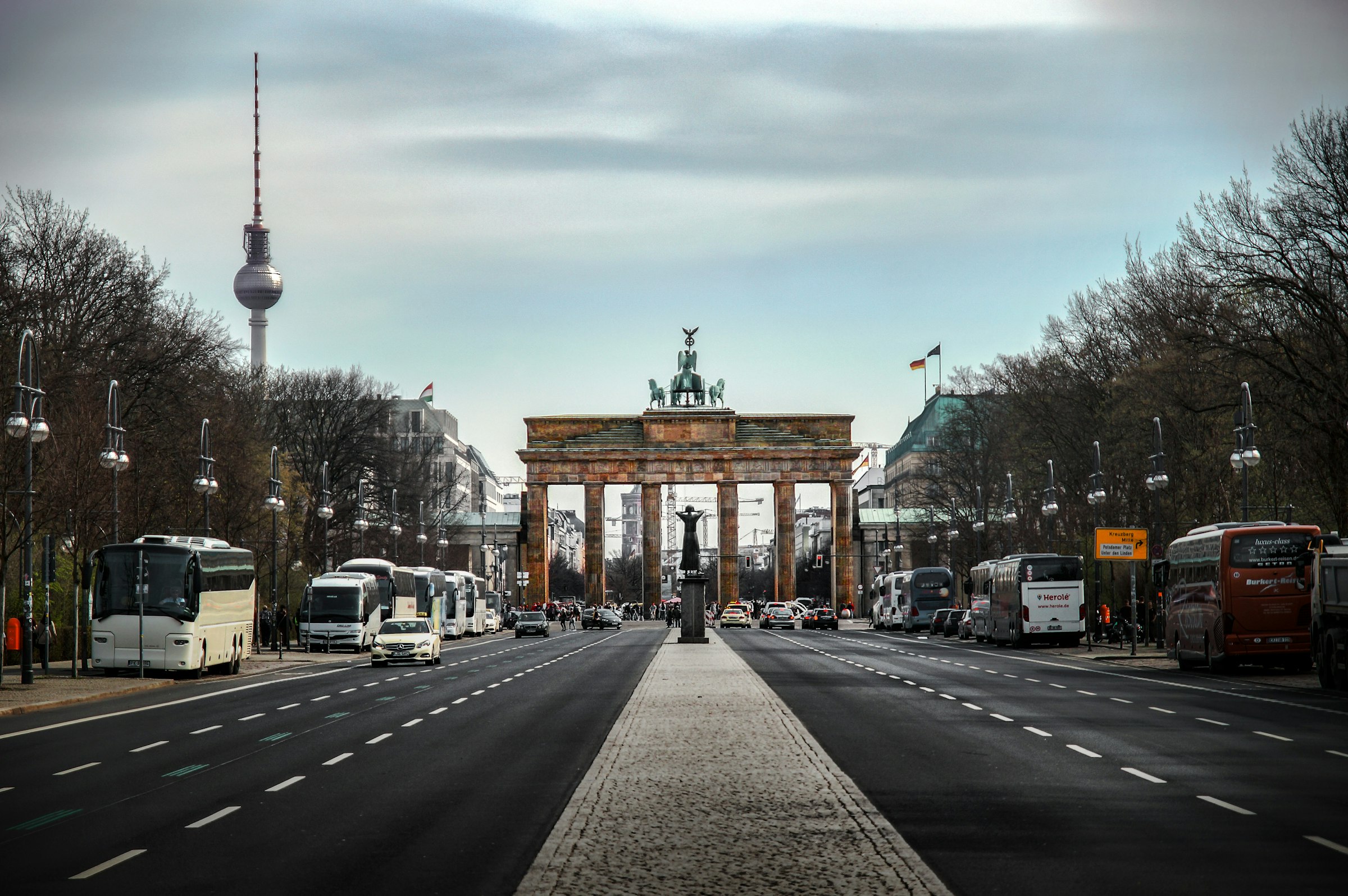
Berlin, Germany · 27 Sept 2026
A ten-minute walk from start to finish, and thirteen world records set in between.

Chicago, USA · 11 Oct 2026
Seven world records on a loop through twenty-nine neighbourhoods.